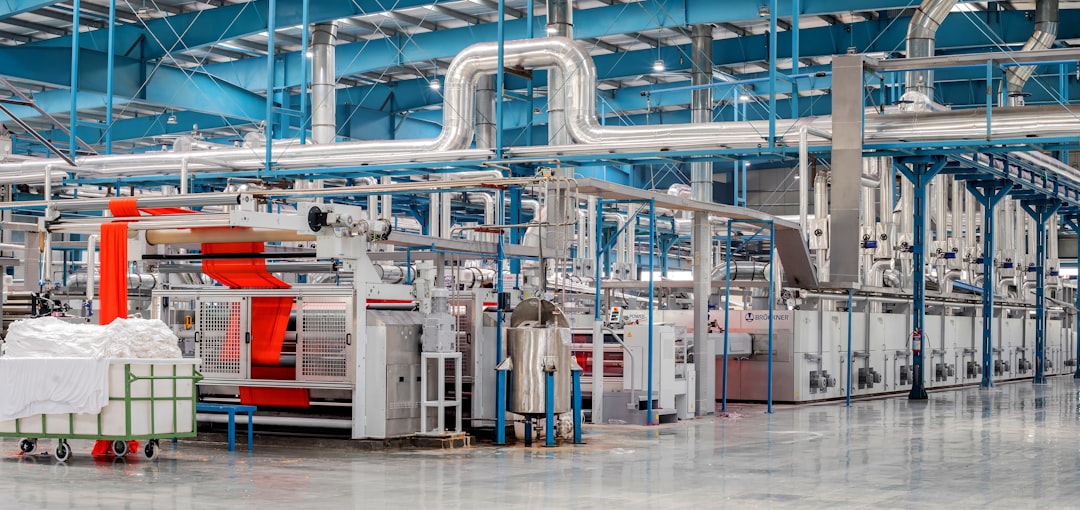
Robostar Industrial Robot Korea Stock: 3 Investment Strategies for the LG-Backed Leader in 2026
Korea’s demographic crisis is quietly reshaping the investment landscape in ways most global investors haven’t fully priced in yet. Birth rates here are at historic lows, factory floors are struggling to find workers, and the pressure to automate is no longer a future problem — it’s happening right now. That’s exactly why the Robostar industrial robot Korea stock story is worth paying close attention to. As someone working inside Korea’s industrial sector every day, I’ve watched automation go from a boardroom talking point to an operational necessity. And Robostar — backed by LG Electronics, dominating the domestic linear robot market — sits right at the center of that shift.
What Is Robostar? Korea’s Quiet Industrial Robot Champion
Robostar isn’t a flashy tech startup. Founded in 1999 by engineers who came out of LG Industrial Systems’ robotics division, the company has spent over two decades doing exactly one thing: building industrial robots for Korean factories. That kind of focus matters. In 2018, LG Group formally absorbed Robostar as a key subsidiary, transforming it from a mid-sized manufacturer into a strategic pillar of LG’s smart factory ambitions.
📊 Robostar — Key Company Metrics (April 2026)
• Market Cap: ~₩627 billion (approx. USD 460M)
• Founded: 1999 (ex-LG Industrial Systems robotics team)
• Largest Shareholder: LG Electronics (~33.4% stake)
• HQ: Ansan, Gyeonggi Province, South Korea
• Domestic Market Position: #1 in linear robots
• Reference Share Price: ₩64,300 (April 20 close)
The #1 linear robot position in Korea isn’t a marketing claim — it’s a structural moat built over two decades. And as the Robostar industrial robot Korea stock gains attention from global investors tracking the automation megatrend, understanding what this company actually makes is the right place to start.
What Robostar Actually Builds — And Where the Revenue Comes From
Robostar’s product lineup covers three core categories, each serving a different slice of the Korean and global factory market.
The Three Core Product Lines
| Product | Function | Key Market |
|---|---|---|
| Linear Robot | High-precision linear transfer along a single axis | Display, Battery, Semiconductor |
| Cartesian Robot | 3-axis pick-and-place movement (X, Y, Z) | General manufacturing, assembly lines |
| AMR (Autonomous Mobile Robot) | Rail-free self-navigating logistics robot | Smart warehouses, logistics centers |
Revenue-wise, standalone robot sales account for roughly 70–75% of total revenue, with the remaining 25–30% coming from engineering services — designing and installing full process systems for client factories. Think of the engineering segment as Robostar’s relationship-builder: it locks in long-term customers and creates recurring system upgrade opportunities.
Why the 2025 Loss Isn’t the Story — The Balance Sheet Is
Watching this from the Korean market side, I’ve seen a lot of investors dismiss Robostar after seeing the 2025 loss figures. That reaction misses the point. Let me break down what actually happened.
The Real Reason for 2025 Underperformance
Robostar’s biggest clients — Korean battery makers and display manufacturers — hit the brakes on new capex in 2024–2025 amid global demand uncertainty. When your customers pause equipment orders, your revenue drops. Simple as that. Simultaneously, Robostar was ramping R&D spending on its AMR and logistics robot platforms, which compressed margins further. These are temporary headwinds, not structural problems.
| Financial Metric | Robostar | Industry Average |
|---|---|---|
| Debt-to-Equity Ratio | ~26% | ~52% |
| Current Ratio | Very High | Moderate |
| LG Electronics Backing | Yes (33.4%) | N/A |
A debt-to-equity ratio of just 26% — half the sector average — tells you this company can absorb a tough year, invest through the cycle, and come out stronger. As a Korean engineer tracking both KOSPI and NASDAQ, the companies I trust during downturns are the ones with fortress balance sheets. Robostar qualifies.
Robostar Industrial Robot Korea Stock: The Customer Diversification Angle
One legitimate concern for any investor in this name is LG concentration risk. Currently, LG-related revenue accounts for roughly 60–70% of Robostar’s total sales. That’s a high dependency. But on the ground here in Korea, I’m seeing real movement on diversification that doesn’t always show up in international coverage.
New Customers, New Markets
Robostar has been quietly supplying robots into Samsung Electronics and SK Hynix’s advanced semiconductor back-end packaging lines — specifically targeting HBM (High Bandwidth Memory) processes, one of the hottest areas in global chip production right now. Meanwhile, overseas, the company has secured BOE Technology Group — China’s largest display maker — as a client, helping push external revenue from a negligible share toward the 30–40% range.
The diversification logic here is straightforward. Samsung and SK Hynix need more automation as HBM demand explodes. Robostar, already proven in LG’s factories, is a natural supplier. The Robostar industrial robot Korea stock thesis isn’t just about LG anymore — it’s about becoming a pan-Korean industrial automation supplier, with global reach as an upside option.
3 Investment Strategies for Global Investors — Based on April 2026 Pricing
Note: These are my personal views as a retail investor in Korea. Do your own due diligence before making any investment decision.
| Strategy | Entry Point | Target | Stop Loss |
|---|---|---|---|
| Short-Term | On volume breakout above ₩65,000 | ₩67,000–68,000 | ₩63,000 |
| Swing (Mid-Term) | Dip to low ₩60,000s | ₩75,000 | Below ₩59,000 |
| Long-Term | Accumulate at ₩64K / add at ₩55K–51K | Previous highs by 2027 | Position-size risk only |
The flow for each strategy looks like this:
| Watch for trigger | → | Enter on confirmation | → | Set target + stop loss | → | Monitor catalysts |
For long-term holders, the key catalyst to track is Q1 2025 earnings disclosure in May and any update on order backlog. A visible uptick in orders from Samsung or SK Hynix would be a strong signal that diversification is translating into real revenue. According to the International Federation of Robotics, Korea remains one of the world’s most robot-dense economies — Robostar is positioned to benefit from every incremental factory upgrade cycle domestically. And for a broader view of where Korea’s automation push sits globally, McKinsey’s automation research underlines exactly why countries with aging workforces accelerate robot adoption fastest.
The Bottom Line: Is the Robostar Industrial Robot Korea Stock Worth Watching?
Robostar isn’t a meme stock riding a robot hype wave. It’s a 25-year-old company with a clear technology edge, a strategic parent in LG Electronics, a nearly debt-free balance sheet, and genuine exposure to the HBM semiconductor and smart logistics booms. The 2025 numbers look rough — but the structural story is intact, and the diversification trajectory is real.
As a Korean engineer tracking both KOSPI and NASDAQ, I’d frame it this way: if you believe Korea’s manufacturing sector will automate aggressively through the rest of this decade — and demographic math says it has no choice — then the Robostar industrial robot Korea stock deserves a spot on your watchlist. The question is just your entry point and time horizon.
Watch the May earnings release. Watch order backlog data. And if the swing entry around the low ₩60,000s materializes, that could be a genuinely attractive risk-reward setup for a mid-term position.