KOSPI Market Analysis: Surviving Trump-Driven Volatility and Overcoming FOMO as a Korean Investor
If you’ve been watching the KOSPI market lately, you already know the feeling. One tweet, one off-the-cuff remark from Donald Trump, and the entire Korean stock exchange lurches sideways before you’ve finished your morning coffee. From where I sit in Korea — both as a petrochemical engineer with a front-row seat to industrial supply chains and as a retail investor — the whipsaw volatility driven by U.S. political commentary has become one of the defining challenges for anyone investing in Korean equities right now.
This post is for global investors who want to understand what’s actually happening on the ground in Korea: why the KOSPI reacts so violently to Trump-era statements, what the behavioral trap of FOMO looks like in the Korean retail market, and — most importantly — how to build a rational strategy that survives the noise.
Why Trump’s Words Hit the KOSPI So Hard
Korea is one of the most trade-dependent economies in the world. Exports account for roughly 40–45% of Korean GDP, with the United States and China representing the two largest trading partners. When a senior U.S. political figure makes statements about tariffs, trade policy, or geopolitical posture toward China, the ripple effects hit Korean industrials, semiconductors, and petrochemicals almost immediately.
As a petrochemical engineer, I see this at the industrial level before it shows up in stock prices. When trade tension rhetoric escalates, procurement managers get cautious, feedstock orders slow, and margin guidance gets murky. By the time that uncertainty reaches quarterly earnings, the KOSPI market has already priced in a worst-case scenario — then partially reversed — then panicked again.
The mechanism is straightforward. Foreign institutional investors — who hold a substantial portion of KOSPI-listed shares — use algorithmic triggers tied to news sentiment. When Trump-related headlines spike in negative sentiment, foreign selling pressure on the KOSPI accelerates within minutes. Korean retail investors then face a cascading decision: hold, sell, or buy the dip? This is exactly where FOMO enters the picture.
Understanding FOMO in the Korean Retail Investing Context
What FOMO Actually Means
FOMO stands for “Fear of Missing Out.” In investing, it describes the anxiety-driven behavior of jumping into a position — or panic-selling out of one — based on emotional momentum rather than fundamental analysis. It’s a global phenomenon, but the Korean retail market has some unique characteristics that make FOMO especially dangerous here.
Korea has an extraordinarily high retail participation rate in equities. During the COVID-era bull market, millions of young Korean investors — nicknamed “동학개미” (Donghak Ants) — poured into the KOSPI market for the first time. Many of them experienced rapid gains, which created a deeply ingrained reflex: when prices drop sharply, buy aggressively because the bounce will come.
That reflex worked in 2020. It has been much more painful in a Trump-volatility environment where the fundamental backdrop — export slowdown, semiconductor cycle uncertainty, and KRW weakness — is genuinely complex.
📊 Key Numbers: KOSPI & Korean Market Context
• KOSPI Index Range (Recent 52-week): Approximately 2,200 – 2,700
• Foreign Ownership of KOSPI: ~30% of total market cap
• Korean Export Dependency: ~40–45% of GDP
• Top Export Destinations: China (~20%), USA (~18%), Vietnam (~9%)
• Retail Investor Share of Daily Trading Volume: ~60–65%
How FOMO Plays Out in Real Time
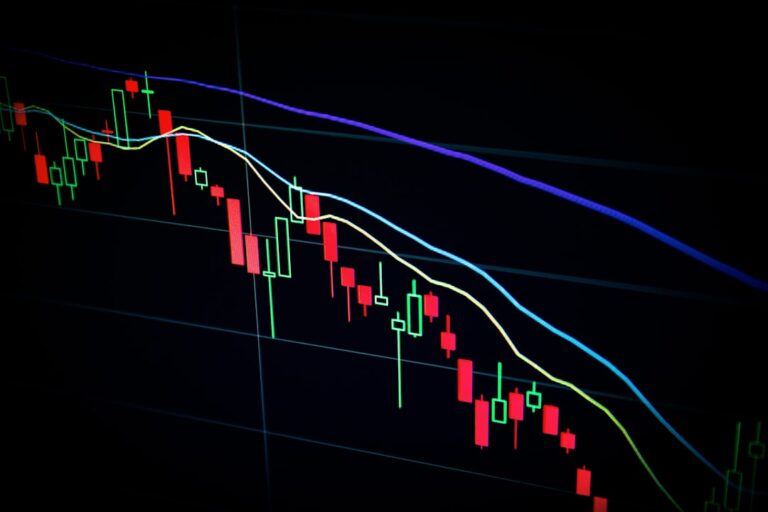
Here’s the pattern I observe repeatedly in the Korean market. Trump makes a trade-related statement. The KOSPI drops 1.5–2% intraday. Korean financial news channels run alarming headlines. Online investing communities (particularly KakaoTalk group chats and Naver finance forums) fill up with speculation. Some investors panic-sell. Others, gripped by FOMO that the dip is a once-in-a-week opportunity, pile in aggressively.
| Investor Behavior | Trigger | Typical Outcome |
|---|---|---|
| Panic Selling | Trump negative headline, foreign selling spike | Locks in losses; misses partial recovery |
| FOMO Buying (unplanned) | Sharp intraday dip, social media buzz | Catches falling knife if fundamentals are weak |
| Planned Dip Buying | Pre-set price target based on valuation | More consistent results over 3–6 month horizon |
| Holding with Conviction | Strong fundamental thesis, diversified position | Best long-term outcome if thesis is sound |
The difference between planned dip buying and FOMO buying is not the action — it’s the prior preparation. One is a strategy; the other is a reaction.
Surviving Trump Volatility: A Framework for KOSPI Investors
Step 1 — Separate Noise from Signal
Not every Trump statement has lasting policy consequences. As a KOSPI market analysis exercise, I always ask: does this statement have a realistic path to becoming legislation or executive action within 90 days? If not, the market’s initial reaction is likely an overreaction. Reuters Markets and Bloomberg Markets are my go-to references for separating headline shock from genuine policy shifts.
| Trump Statement Drops | → | Assess Policy Probability | → | Map Korea Exposure | → | Act or Hold |
Step 2 — Know Your Valuation Anchors Before the Volatility Hits
The investors who do best in FOMO-driven markets are the ones who already know their target entry prices before the chaos starts. For KOSPI market investing, I maintain a simple watchlist with pre-calculated fair value ranges for each position. When volatility hits, I’m not making decisions — I’m executing a pre-existing plan.
Step 3 — Respect the KRW as a Macro Signal
As a Korean investor, I watch the USD/KRW exchange rate closely during Trump-driven volatility. A weakening KRW (Korean won depreciating against the dollar) often signals that foreign capital is flowing out of Korea. This tends to amplify KOSPI downside in the short term. Conversely, KRW stabilization often precedes a KOSPI recovery. You can track this relationship through Investing.com USD/KRW data.
What This Means for Global Investors Looking at Korea
Korea is genuinely one of the most interesting emerging-market opportunities for global investors — world-class semiconductor companies, dominant battery and EV supply chain players, and a consumer electronics ecosystem that is deeply integrated into global technology. But accessing the KOSPI market successfully requires understanding the behavioral and structural dynamics that I’ve described here.
Trump-era rhetoric will continue to create sharp, short-lived dislocations. FOMO will continue to drive Korean retail behavior in ways that temporarily distort valuations. For patient, analytical investors — the kind that reads posts like this one — those dislocations are opportunities, not threats, provided you walk in with a framework rather than a feeling.
From where I sit in Korea, the best global investors in Korean equities are the ones who treat Trump volatility as a calendar event to prepare for, not a surprise to react to. Build your watchlist, know your prices, watch the KRW, and let the FOMO crowd create your entry points.
Jay is a Korean petrochemical engineer and retail investor based in South Korea. He writes about Korean market dynamics and global macro trends at jaystrend.com. This post is for informational purposes only and does not constitute financial advice.