Korea Economy Analysis: What Jensen Huang’s “Age of Reasoning” at GTC 2026 Means for Korean Investors
Jensen Huang Just Redrew the AI Map — Here’s Why Korean Investors Are Paying Close Attention
Every year, NVIDIA’s GTC conference sets the tone for where the global AI industry is heading. But GTC 2026 felt different. Jensen Huang didn’t just announce new chips — he declared a new era. He called it the “Age of Reasoning,” and the implications for semiconductor supply chains, AI infrastructure spending, and Korean technology stocks are significant enough that any serious Korea economy analysis needs to start here.
From where I sit in Korea, working in petrochemicals by day and watching tech markets closely by night, GTC 2026 landed with real weight. Korea is not a passive observer in this story. It sits at the center of the global AI hardware supply chain — from memory chips to display panels to advanced packaging — and the direction Jensen Huang is pointing will shape capital flows into and out of Korean industries for the next several years.
Let me break down what actually matters from GTC 2026, and then connect it to what Korean investors and global observers of the Korean market should be watching.
The Three Big Themes from GTC 2026
1. The Age of Reasoning: AI That Thinks Before It Answers
The central thesis Jensen Huang laid out at GTC 2026 is a fundamental shift in how AI systems operate. The first generation of large language models was built around fast pattern recognition — predicting the next token as quickly as possible. The new paradigm is different. Reasoning models are designed to slow down, think through problems in steps, and verify their own outputs before responding.
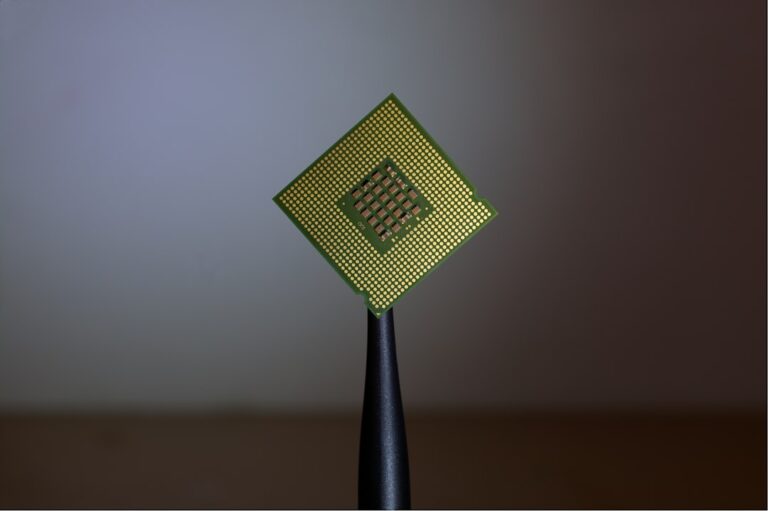
This isn’t just a philosophical shift. It has direct hardware consequences. Reasoning models require significantly more compute per query than traditional inference workloads. That means more GPUs, more memory bandwidth, and longer inference cycles — all of which translate into sustained demand for the kind of high-bandwidth memory (HBM) that SK Hynix and Samsung Electronics produce almost exclusively for the global market.
2. Rubin: NVIDIA’s Next-Generation Architecture
NVIDIA officially confirmed and detailed the Rubin GPU architecture at GTC 2026, the successor to Blackwell. Rubin is engineered specifically for the reasoning era — optimized for complex, multi-step inference workloads rather than raw training throughput alone.
What makes Rubin especially relevant from a Korean market perspective is its memory requirements. Rubin-class systems are expected to demand next-generation HBM4 and HBM4E, the development of which SK Hynix is leading globally. According to Bloomberg Technology, SK Hynix has already secured early supply agreements with NVIDIA for HBM4 production, giving Korean memory makers a structurally advantaged position in the Rubin cycle.
📊 Key Numbers: GTC 2026 at a Glance
• Rubin GPU Architecture: Successor to Blackwell, optimized for multi-step reasoning inference
• HBM Demand Increase: Reasoning workloads estimated to consume 3–5x more memory bandwidth per query vs. traditional inference
• SK Hynix HBM4 Readiness: On track for production ramp in late 2025 / 2026
• Samsung HBM4 Status: Still working through NVIDIA qualification — outcome critical for market share
• Global AI Infrastructure Spend: NVIDIA projecting multi-trillion dollar data center investment cycle through 2030
3. Agentic AI: When AI Stops Answering and Starts Acting
Perhaps the most consequential concept Jensen Huang introduced — or more precisely, crystallized — at GTC 2026 is agentic AI. This refers to AI systems that don’t simply respond to a prompt but instead execute multi-step tasks autonomously, calling tools, browsing data, writing and running code, and making decisions across extended workflows.
Agentic AI represents the commercialization bridge that many investors have been waiting for. If AI can genuinely execute complex enterprise workflows — not just answer questions — the total addressable market expands dramatically. As a Korean investor, this is where I see the second-order effects rippling through Korean industries: enterprise software adoption, data center build-out demand, and the robotics sector, which Jensen Huang also flagged as a major application layer for agentic systems.
Korea’s own robotics ecosystem — anchored by companies like HD Hyundai Robotics and Doosan Robotics — gains a meaningful narrative tailwind from this shift. The Financial Times has noted that agentic AI is accelerating enterprise procurement cycles for automation hardware globally, a trend Korean industrial companies are well-positioned to benefit from.
How GTC 2026 Connects to Korean Market Dynamics
The Memory Chip Equation
No Korea economy analysis of the AI wave is complete without zeroing in on memory semiconductors. Korea produces roughly 60–70% of the world’s DRAM and a dominant share of HBM. The Rubin architecture’s appetite for HBM4 makes Korean memory makers not just suppliers but critical infrastructure for the global AI buildout.
| Company | HBM Position | Rubin Cycle Outlook | Key Risk |
|---|---|---|---|
| SK Hynix | HBM4 lead supplier, early NVIDIA partner | Strong — structurally advantaged | Yield ramp execution risk |
| Samsung Electronics | HBM3E supplier, HBM4 qualification pending | Moderate — needs qualification win | Continued delay risk with NVIDIA |
| Micron (US) | Growing HBM presence, gaining share | Rising competitor to Korean makers | Scale vs. Korean incumbents |
The Agentic AI Flow: From Model to Korean Supply Chain
| Agentic AI Models Deployed | → | Larger Data Center Buildout | → | HBM + NAND Demand Surge | → | Korean Chipmakers Benefit |
Beyond Chips: Robotics and Energy Infrastructure
One piece of the GTC 2026 story that doesn’t get enough attention in standard Western coverage is how Jensen Huang framed the physical AI opportunity — AI that operates in the real world through robots, autonomous systems, and industrial automation. As a Korean engineer, this resonates. Korea’s manufacturing base is deeply integrated with industrial robotics, and Korean companies are increasingly competitive in this space.
There is also the energy angle. The compute demands of reasoning AI and agentic systems require massively more power per data center. According to the International Energy Agency, global data center electricity demand is expected to more than double by 2030. This creates a quiet but real opportunity for Korean energy infrastructure companies and materials suppliers — including, perhaps counterintuitively, the petrochemical sector I work in, which supplies insulation materials and specialty chemicals used in data center construction.
What This Means for Global Investors Watching Korea
From a pure Korea economy analysis standpoint, GTC 2026 reinforces a structural thesis that has been building since 2023: Korea’s technology sector is not riding the AI wave passively. It is embedded in the foundational hardware layer that makes the AI era physically possible.
The Rubin architecture and the agentic AI paradigm announced at GTC 2026 are not short-term catalysts — they represent a multi-year capital expenditure cycle that will sustain demand for Korean memory chips, Korean display technology (OLED panels increasingly used in AI workstations and edge devices), and Korean industrial automation.
As a Korean investor, I am watching the HBM4 qualification timeline closely, monitoring how quickly Korean robotics companies can align their product roadmaps with the agentic AI use cases NVIDIA is opening up, and keeping one eye on whether the Korean government’s AI infrastructure investment commitments translate into actual domestic data center demand that Korean companies can capture.
GTC 2026 was a reminder that the AI story is still in its early chapters. The Age of Reasoning has just been declared. For investors paying attention to Korea, the supply chain implications of that declaration are more concrete — and more investable — than most global commentary currently reflects.
Jay writes about Korean markets, macro trends, and global investment themes from Seoul. All views are personal and do not constitute financial advice. For more Korea economy analysis and on-the-ground Korean market insights, visit jaystrend.com.