ETF Investing Korea: Why I Sold S&P 500 and Rotated Into Korean Semiconductor ETFs After a 49% Pension Gain
A 49% Return — Then I Made a Surprising Move
If you told most global investors you’d just booked a 49% gain in your pension savings account, they’d probably say: “Don’t touch it.” But from where I sit in Korea, watching both the domestic market and global macro signals every day, I made the opposite call. I sold a significant portion of my S&P 500 ETF position and rotated into Korean semiconductor ETFs — inside my yeongeumjeochuk (pension savings) account.
That decision might seem counterintuitive to global investors who’ve been riding the US market wave. But there’s a logic rooted in Korean market structure, valuation gaps, and a macro inflection point that I think is worth explaining in full. This is the kind of ground-level thinking that ETF investing Korea-style demands — and it’s rarely covered in Western financial media.
First: Why the S&P 500 Position Was Worth Taking in the First Place
I originally built the S&P 500 ETF position inside my Korean pension savings account (연금저축펀드) as a core long-term holding. Korean pension savings accounts offer meaningful tax advantages — contributions up to ₩6 million per year are deductible, and gains are tax-deferred until withdrawal. For disciplined, long-term ETF investing Korea residents use this vehicle as a core wealth-building tool.
The S&P 500 exposure made perfect sense during the post-COVID recovery. US tech dominated. Dollar strength added a currency tailwind for Korean won-denominated investors. The position compounded beautifully — ultimately returning 49% over the holding period.
📊 Key Numbers: My Pension Account Rotation
• Pension vehicle: Korean 연금저축펀드 (Pension Savings Fund)
• Previous core holding: S&P 500 index ETF
• Realized gain before rotation: +49%
• New allocation: Domestic Korean Semiconductor ETF
• Tax treatment: Gains remain tax-deferred within the pension wrapper
• Annual tax deduction limit: ₩6,000,000 (~USD 4,500)
Why I Rotated: The Korean Semiconductor Thesis
Valuation Divergence Is Hard to Ignore
As a petrochemical engineer by trade, I’m used to thinking in cycles. The semiconductor industry, like petrochemicals, moves in distinct up-and-down cycles — and right now, the cycle indicators I follow are pointing to a recovery phase for Korean chipmakers. After a brutal downturn in memory chip prices through 2022 and into 2023, inventory correction in DRAM and NAND appears to be bottoming out globally.
Meanwhile, Korean semiconductor stocks — led by Samsung Electronics and SK Hynix — were trading at valuations that looked deeply discounted relative to their historical averages and relative to US semiconductor peers. The Bloomberg Intelligence semiconductor cycle tracker and other industry data were pointing to an inflection, and from where I sit in Korea, the supply-side discipline from Korean memory makers was becoming visible in real-time channel data.
The Currency Factor
Here’s the angle global investors often miss: when the Korean won is weak against the dollar, Korean exporters like Samsung and SK Hynix benefit directly — their dollar-denominated chip revenues translate into more won at home. But it also means that as a Korean investor holding a dollar-denominated S&P 500 ETF, I’ve already captured significant currency upside. Rotating into a domestic KRW-denominated semiconductor ETF at this stage is, in part, a currency risk management move.
Comparing the Two Positions: S&P 500 ETF vs. Korean Semiconductor ETF
| Factor | S&P 500 ETF (Previous) | Korean Semiconductor ETF (New) |
|---|---|---|
| Currency Exposure | USD (favorable when won is weak) | KRW (domestic, cycle-driven) |
| Cycle Position | Late-stage bull run, elevated valuations | Early-to-mid recovery, compressed valuations |
| Key Drivers | US macro, Fed policy, mega-cap tech | Memory chip cycle, AI demand, HBM growth |
| Tax Treatment (in pension) | Tax-deferred | Tax-deferred |
| Concentration Risk | Broad (500 companies) | Sector-focused (higher risk/reward) |
| Global Relevance | High — US market is the global benchmark | High — Korea supplies ~60% of global DRAM |
The AI and HBM Catalyst: Why This Isn’t Just a Classic Cycle Play
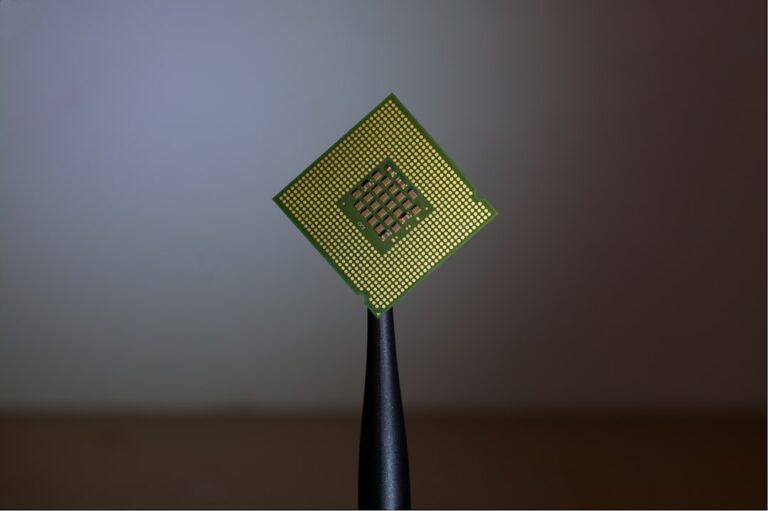
What makes this rotation more than a simple cyclical bet is the structural AI demand story underneath it. SK Hynix in particular has emerged as the dominant supplier of High Bandwidth Memory (HBM) chips — the specialized DRAM that powers AI accelerators like NVIDIA’s H100 and H200 GPUs. This is not a commodity play. It’s a structural shift in what memory chips are used for and how much they can command in pricing power.
As a Korean engineer, I see this from the supply chain side. The capital expenditure cycles, the fab expansion decisions, the materials procurement — these are signals that show up in Korea’s industrial data before they show up in quarterly earnings reports abroad. And right now, those signals are consistent with a genuine demand uplift driven by AI infrastructure buildout, not just restocking.
According to the Semiconductor Industry Association, global semiconductor sales are recovering meaningfully, with memory leading the rebound. This aligns precisely with what I’m seeing on the ground in Korea.
How the Korean Pension Wrapper Makes This Trade Smarter
This is the part that often surprises global investors when I explain Korean personal finance structures. Inside the 연금저축펀드, switching between ETFs does not trigger an immediate tax event. I could rotate from S&P 500 ETF to a domestic semiconductor ETF, locking in that 49% gain, without paying capital gains tax at the point of switch. Tax is deferred until withdrawal — and even then, taxed at favorable pension income rates.
This tax efficiency is a core reason why ETF investing Korea through pension wrappers has become so popular among sophisticated Korean retail investors. It’s not unlike the logic of switching between funds inside a US IRA or UK ISA — but many global investors don’t realize Korea has an equivalent mechanism that is actively used for tactical allocation shifts like the one I just made.
| 49% Gain in S&P 500 ETF | → | Tax-Free Intra-Account Rotation | → | Korean Semiconductor ETF Position | → | Tax Paid Only at Withdrawal |
What Global Investors Should Take Away From This
I want to be direct: I’m not suggesting every global investor should pile into Korean semiconductor ETFs right now. Sector concentration carries real risk, and the chip cycle, while recovering, is never linear. But there are three broader principles worth extracting from this rotation that apply regardless of where you invest:
1. Know your cycle position. Booking 49% and rotating isn’t market-timing for its own sake — it’s recognizing where each asset sits in its cycle. US large-cap equities were priced for a lot of good news. Korean semiconductor stocks were not.
2. Use your tax wrapper intelligently. Whether it’s a Korean pension savings account, a US Roth IRA, or a UK ISA, making tactical rotations inside tax-advantaged accounts is dramatically more efficient than doing it in a taxable account. This is a structural advantage most retail investors underuse.
3. Watch Korea for leading signals. Korea sits at the intersection of global semiconductor supply, Chinese demand, and US tech consumption. Korean industrial and trade data — especially Korea Customs Service export statistics — often give early signals on global tech cycles. As a Korean investor, this is home ground advantage I try to use consistently.
Final Thought: The Insider Edge Isn’t About Being Lucky
The 49% gain felt good. But what felt better was having a clear, reasoned framework for what to do next — one grounded in cycle awareness, tax efficiency, and on-the-ground Korean market knowledge. That’s ultimately what ETF investing Korea-style is about from my perspective: combining global macro thinking with local insight, and executing through the most efficient structures available.
I’ll continue tracking this position and sharing updates here on Jay’s Trend. If you’re a global investor looking to understand what’s happening in Korea beneath the headline numbers — this is exactly the kind of analysis I built this blog to provide. Stay tuned.