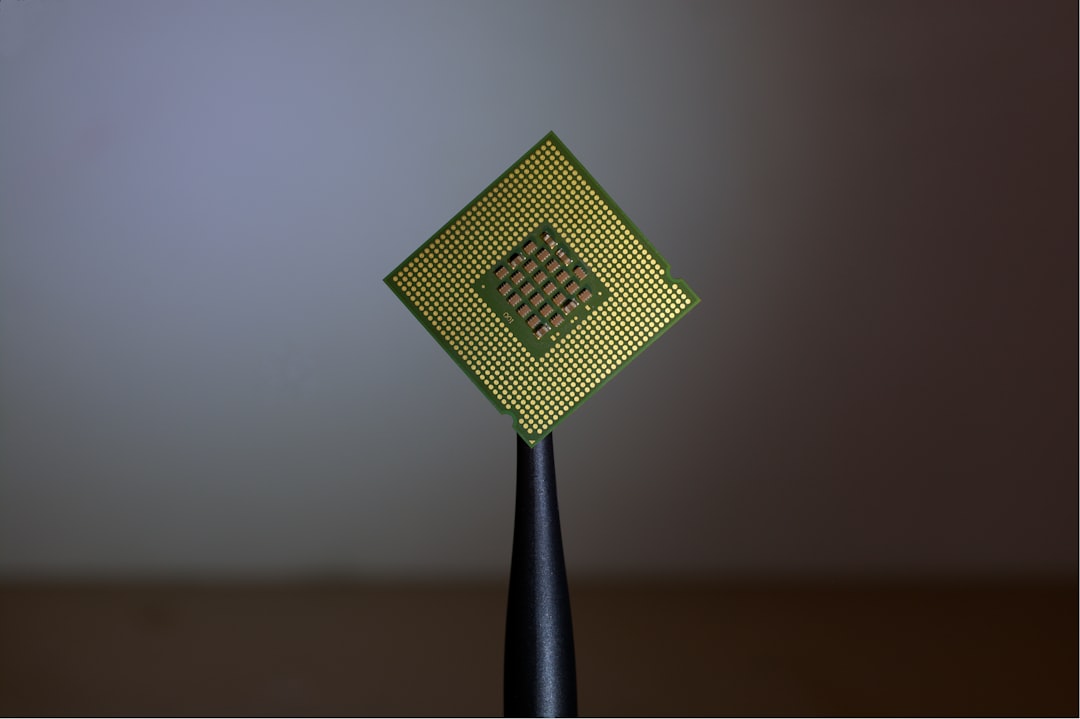
AI Related Stocks Semiconductor Value Chain Map: 10 Layers Every Global Investor Is Missing
Everyone’s talking about Nvidia. Everyone’s watching Samsung. But if you think the AI related stocks semiconductor value chain map begins and ends with GPU makers, you’re only seeing half the picture — maybe less. I’ve been working inside Korea’s petrochemical and industrial sector for nearly a decade, and the more I trace the physical supply chain that actually powers AI, the more I realize how many investment layers the market is still sleeping on.
This post is the master map. A complete, ground-up look at every layer of the AI value chain — from copper mines and silica sand all the way up to software platforms. Think of it as the bird’s-eye view before we dive deep into each layer in this ongoing series.
Why the AI Related Stocks Semiconductor Value Chain Map Matters Right Now
Here’s a question most investors don’t ask: what does it actually take to run one GPU?
Start pulling that thread and you end up somewhere surprising. You need ultra-pure silicon wafers refined from sand. You need copper — about 27 metric tons of it per megawatt of data center capacity — for power wiring and cooling pipes. You need rare earth elements, specialty gases, ABF substrate films, and an industrial volume of water that rivals a small city’s daily consumption.
AI is a software story sitting on top of an intensely physical supply chain. That physical chain is where the bottlenecks live — and where some of the most undervalued investment opportunities are hiding right now.
What Is an LLM and Why Does It Need So Much Infrastructure?
AI, at its core, is software that learns patterns from massive datasets. The models getting all the attention right now — ChatGPT, Claude, Gemini — are Large Language Models (LLMs). They train on hundreds of billions of parameters, which requires astronomical compute. That compute runs on tens of thousands of GPUs. And those GPUs need to be housed, powered, cooled, connected, and supplied with water.
AI is digital. But everything that makes it run is decidedly physical. That’s the central insight behind mapping the full AI related stocks semiconductor value chain.
The Complete AI Value Chain: 10 Layers From Sand to Software
Layer 1 — Raw Materials
It all starts in the ground. Silicon for semiconductors is extracted from silica sand. Add copper, aluminum, gallium, germanium, and rare earth elements — each one critical for different parts of the stack. Copper alone flows into power distribution, cooling systems, and interconnects throughout every data center. According to the IEA, data center energy and resource demand is accelerating at a pace that is fundamentally reshaping commodity markets.
Layer 2 — Materials & Equipment
Raw materials get refined into semiconductor-grade inputs: ultra-pure silicon wafers, photoresist chemicals, specialty gases, ABF substrate films, and glass substrate materials. ASML’s EUV lithography machines, ZEISS optical systems, and SCHOTT specialty glass are the gatekeepers of this layer. No fab runs without them.
Layer 3 — Chip Design & Fabrication
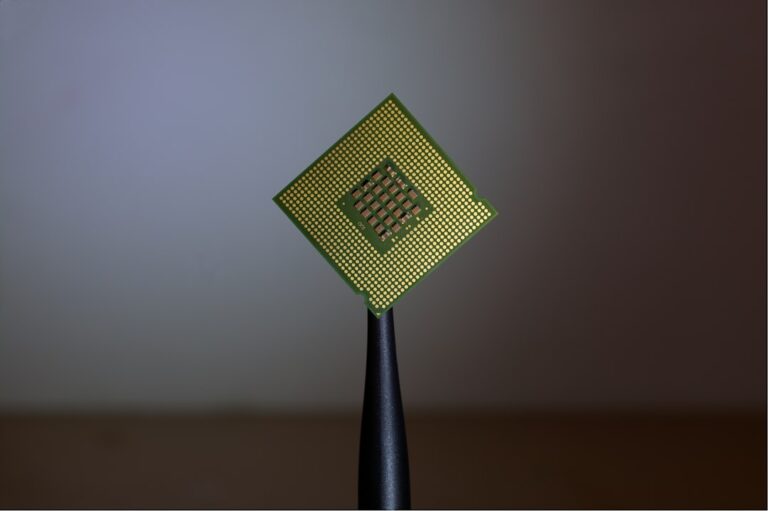
This is the layer everyone watches. Nvidia and AMD design the GPUs. TSMC and Samsung actually manufacture them. Currently, over 80% of AI GPUs run on the Nvidia-design / TSMC-manufacture pipeline. But hyperscalers — Google (TPU), Amazon (Trainium), Microsoft (Maia) — are pouring billions into custom AI chips (ASICs), slowly reshaping this dynamic.
Layer 4 — Advanced Packaging (Substrates & Glass)
A fabricated chip can’t go directly onto a board. It needs to be packaged — bonded with HBM memory, mounted on a substrate, and connected to the motherboard. The dominant technology today is the ABF substrate. The next generation is glass substrates. As AI chips scale up in complexity, packaging becomes one of the most acute bottlenecks in the entire chain. In Korea, Samsung Electro-Mechanics is a global player in ABF substrates, and SKC’s subsidiary Absolics is currently the only Korean company directly developing glass substrate mass production, targeting a 2027–2028 ramp.
Layer 5 — Server Assembly
Packaged chips get integrated into server boards, loaded into racks alongside memory, storage, power supplies, and networking cards. Companies like Super Micro Computer (SMCI) are the ODMs that assemble the actual AI servers the hyperscalers buy in volume.
Layer 6 — Data Center Infrastructure: Power, Cooling & Water
A single AI server rack generates roughly 10 times the heat of a standard rack. Air cooling simply can’t keep up anymore. The industry is being forced toward liquid cooling and immersion cooling systems. And water consumption is staggering — one large data center can consume as much water in a day as a town of 50,000 people. Watching this from the Korean market side, it’s striking how little investor attention this layer gets relative to its structural importance.
Layer 7 — Power Generation
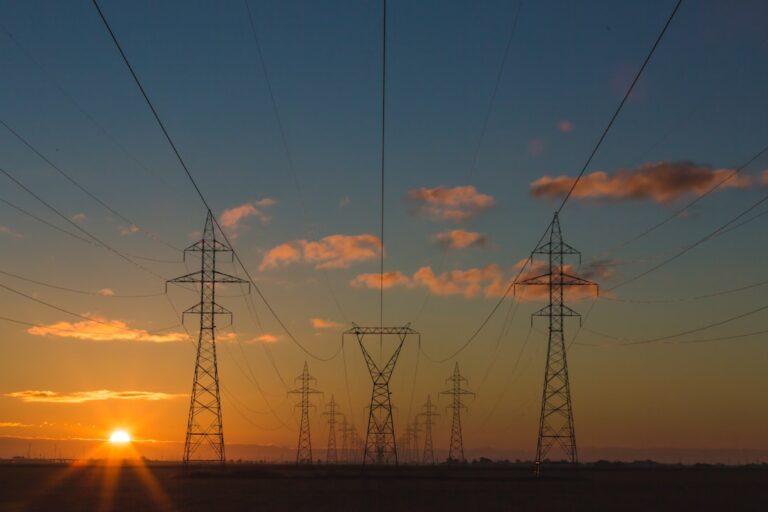
No electricity, no AI. Global data center power consumption is projected to rise from 415 TWh in 2024 to 945 TWh by 2030 — more than doubling in six years. Renewables are expanding fastest, but stable baseload power is driving serious interest in nuclear energy, particularly Small Modular Reactors (SMRs) as a post-2030 solution.
Layer 8 — Networking & Optical Fiber
Tens of thousands of GPUs need to behave like a single brain. That requires ultra-high-speed interconnects — both inside data centers (GPU-to-GPU) and between facilities. Copper cable is hitting its limits. The shift to fiber-optic networking is accelerating, and Nvidia’s multi-billion-dollar optical partnership with Corning signals just how seriously the industry is taking this transition.
Layer 9 — Storage (HDD & SSD)
AI model training datasets and outputs are growing into the petabyte range. That data needs somewhere to live long-term. HDD and SSD demand is rising structurally — not because of consumer electronics cycles, but because of AI training data volumes. Morningstar’s coverage has flagged SanDisk, Seagate, and Western Digital among the top-performing names for 2026 precisely for this reason.
Layer 10 — Software & Platforms
At the top of the stack, this is where business value is ultimately extracted. AI deployment platforms (Palantir, ServiceNow), cloud infrastructure (AWS, Azure, GCP), and AI-enhanced legacy software (Adobe, Salesforce) all sit here. The market is already paying significant attention to this layer — which is exactly why the earlier physical layers deserve a harder look.
AI Related Stocks Semiconductor Value Chain Map: Layer-by-Layer Comparison
The table below is my own assessment of each layer across three dimensions: current market attention, growth outlook, and supply bottleneck risk. The most interesting asymmetries are where bottleneck risk and growth outlook are both high, but market attention is still low.
| Layer | Market Attention | Growth Outlook | Bottleneck Risk | Key Names |
|---|---|---|---|---|
| GPU / AI Chips | ★★★★★ | ★★★★★ | ★★★★☆ | Nvidia, AMD, Broadcom / Samsung, SK Hynix |
| HBM Memory | ★★★★☆ | ★★★★★ | ★★★★★ | Micron / SK Hynix, Samsung |
| ABF / Glass Substrates | ★★★☆☆ | ★★★★★ | ★★★★★ | Ibiden, Unimicron / Samsung Electro-Mechanics, SKC |
| Power / Energy | ★★★☆☆ | ★★★★☆ | ★★★★☆ | Constellation Energy, Eaton / KEPCO, Hyosung |
| Cooling / HVAC | ★★★☆☆ | ★★★★☆ | ★★★☆☆ | Vertiv, nVent / Doosan Enerbility |
| Copper / Rare Earths | ★★☆☆☆ | ★★★★☆ | ★★★★☆ | Freeport-McMoRan, MP Materials / LS, Poongsan |
| Optical Networking | ★★★☆☆ | ★★★★☆ | ★★★☆☆ | Arista, Lumentum, Coherent / OISolution, Fiberpro |
| HDD / SSD Storage | ★★☆☆☆ | ★★★★☆ | ★★★☆☆ | Seagate, Western Digital, SanDisk |
| Water / Wastewater | ★☆☆☆☆ | ★★★★☆ | ★★☆☆☆ | Xylem, American Water Works / Coway, Woongjin |
| Data Center REITs | ★★☆☆☆ | ★★★★☆ | ★★☆☆☆ | Equinix, Digital Realty |
| AI Software / Platforms | ★★★★☆ | ★★★★★ | ★☆☆☆☆ | Palantir, ServiceNow, Microsoft / Kakao, Naver |
Note: Market attention and bottleneck risk ratings reflect my relative assessment at time of writing — not absolute metrics. Use as a directional framework, not a buy/sell signal.
4 Underappreciated Layers in the AI Value Chain Worth Watching
As someone inside Korea’s industrial sector who tracks both KOSPI and NASDAQ, the layers below stand out as the most interesting asymmetric opportunities right now — high structural demand, meaningful supply constraints, and still relatively low market attention.
ABF & Glass Substrates
Every GPU that ships consumes substrate material. Demand scales in direct proportion to GPU shipment volumes. Yet the substrate market gets a fraction of the coverage that GPU makers do. The top five producers — led by Ibiden and Unimicron — control 74% of global ABF substrate capacity. Nvidia, Intel, and AMD have all contributed directly to supplier capex because availability is that critical. In Korea, Samsung Electro-Mechanics has competitive ABF capacity, and SKC’s Absolics subsidiary is the only Korean company building direct glass substrate capability, targeting mass production around 2027–2028.
Water Infrastructure
This is the quietest beneficiary of the AI buildout. One large hyperscale data center consumes as much water per day as a town of 50,000 people — and that figure rises as liquid cooling becomes the standard. Water efficiency is becoming a regulatory focus for data center operators globally. Overseas, Xylem and American Water Works are the clearest plays. On the ground here in Korea, there isn’t yet a clearly labeled “AI water” stock — which might be exactly what makes this worth watching.
HDD & SSD Storage
AI training datasets are growing into the tens of petabytes. That data has to live somewhere. The storage layer has been overlooked because it’s “not a semiconductor” story — but structurally, it’s one of the most direct AI demand beneficiaries. Morningstar flagged Seagate, Western Digital, and SanDisk among its highest-conviction picks for 2026 for this exact reason.
Copper & Raw Materials
27 metric tons of copper per megawatt of data center capacity. The global copper supply deficit for 2025 is estimated at around 304,000 metric tons — with AI infrastructure buildout and grid expansion both compressing supply simultaneously. In Korea, LS and Poongsan have direct exposure to this copper supercycle through their wire and copper processing businesses.
📊 Key Numbers at a Glance
• Copper per MW of data center capacity: ~27 metric tons
• Global data center power (2024 → 2030): 415 TWh → 945 TWh (+128%)
• Daily water use, large data center: Equivalent to a city of 50,000
• ABF substrate top-5 market concentration: 74% of global capacity
• 2025 global copper supply deficit estimate: ~304,000 metric tons
• AI GPU market share (Nvidia design + TSMC fab): 80%+
How the Value Chain Flows: A Simple Visual
| Raw Materials Sand, Copper, Rare Earths |
→ | Materials & Equipment Wafers, EUV, ABF |
→ | Chip Design & Fab Nvidia, TSMC, Samsung |
→ | Packaging & Servers Substrates, HBM, ODMs |
| Data Center Infra Power, Cooling, Water |
→ | Networking & Storage Fiber, HDD, SSD |
→ | Software & Platforms Palantir, Azure, Naver |
The Takeaway for Global Investors
The AI related stocks semiconductor value chain map is ten layers deep, and the market is pricing three or four of them with any real conviction. That’s not a criticism — it’s an opportunity.
The layers with the highest combination of supply bottleneck risk and structural demand growth — ABF and glass substrates, copper, water infrastructure, and long-term storage — are not exotic bets. They are industrial necessities. A GPU cannot ship without a substrate. A data center cannot operate without water and copper. These aren’t optional components in the AI stack.
As a Korean engineer who invests personally in both Korean and US markets, I’ve built this entire series to go one layer at a time — sector by sector, stock by stock. The full AI related stocks semiconductor value chain analysis, from HBM memory to data center REITs to AI software, is covered in the linked series above.
The AI gold rush is real. The smart money isn’t just buying the shovels. It’s buying the copper in the shovel handle, the water that cools the forge, and the glass that carries the signal. Start mapping the full chain — because that’s where the next wave of returns is quietly forming.