AI Job Displacement White Collar Workers: 3 Hard Truths Korean Insiders Are Already Acting On
Let me tell you something uncomfortable. AI job displacement of white collar workers isn’t a future threat — it’s already happening, and most people I talk to here in Korea are still in denial about it. Elon Musk keeps saying AI and robots will make everyone rich. I’ve heard him say it on podcasts, at Davos, in interviews. And every single time I hear it, I feel a quiet alarm go off in my head. Not because he’s wrong — but because of what has to happen first.
Musk Is Right About the Destination — But Wrong to Skip the Middle Part
Musk’s logic is actually simple and not entirely wrong. Robots take over labor. Production costs fall toward zero. Goods become cheap. Everyone lives abundantly. Clean. Elegant. Optimistic.
The problem isn’t the logic. It’s the sequence.
As someone inside Korea’s industrial sector, I watch this play out in real time. Tesla’s Optimus robot is ahead of schedule. Domestic robotics companies here in Korea are scrambling to catch up. Meanwhile, the energy infrastructure Musk talks about — space-based data centers, truly distributed power grids — experts are saying that’s decades away.
So here’s the actual timeline:
| Phase | What Happens | Timeline |
|---|---|---|
| Phase 1 | Mass AI job displacement, white collar workers hit hard | Now → 5 years |
| Phase 2 | Wealth concentration in robot/AI owners; inequality spikes | 5 → 20 years |
| Phase 3 | Policy, redistribution, new economic equilibrium | 20–40 years |
| Phase 4 | The “everyone is rich” world Musk describes | Maybe. Eventually. |
You and I are living in Phase 1. The question is whether you’re positioned for Phase 2 and beyond — or whether you’re still waiting to see if Phase 1 is real.
Why AI Job Displacement of White Collar Workers Is Different This Time
Every generation thinks they’re safe. The textile workers during the Industrial Revolution didn’t believe machines would take their jobs — right up until the machines took their jobs.
But here’s what’s different now. Industrial-era automation replaced muscle. What’s happening today replaces cognition. And that means the safety net that white collar workers always assumed — “at least I’m not a factory worker” — is gone.
Watching this from the Korean market side, I can tell you that the companies I track in petrochemicals and manufacturing are already cutting analyst headcount. Not factory workers. Analysts. The people doing data reporting, compliance review, procurement comparison — all being handed to AI tools that cost a fraction of one salary.
McKinsey’s research on generative AI and future of work estimates that up to 12 million occupational transitions may be needed in the US alone by 2030. Globally, the numbers are far larger. Accountants, paralegals, junior developers, diagnostic radiologists — all flagged as high-exposure roles.
The Bank of Korea has published similar warnings. High-skill, high-education jobs are not the safe harbor people assume.
The Wealth Gap Gets Worse Before It Gets Better
Here’s the part Musk’s optimism glosses over. When robots generate value, that value flows to whoever owns the robots. It doesn’t distribute itself.
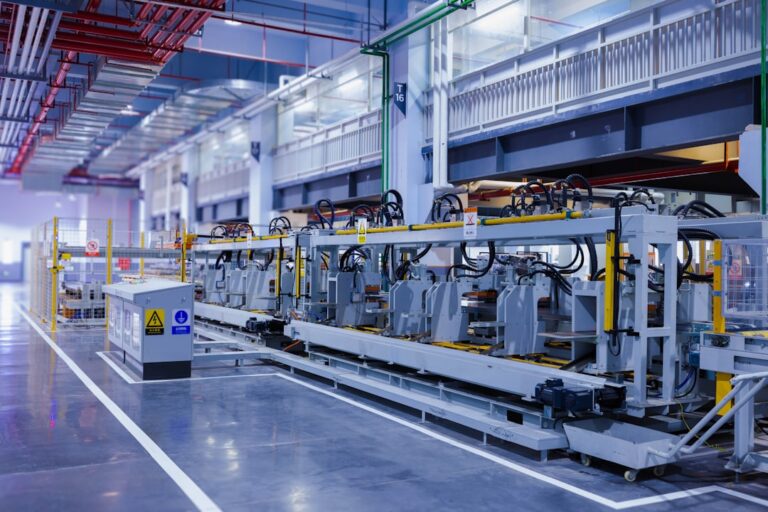
Think about it concretely. A factory owner replaces 80 workers with Optimus robots. Production costs drop 60%. Margins explode. The factory owner captures all of that. The 80 workers? They’re looking for jobs in a market that just got tighter.
History is consistent on this. Every major technological revolution — steam power, electrification, computing — took decades before productivity gains reached ordinary workers. The intervening period? Sharp inequality spikes, social instability, political backlash.
As a Korean engineer tracking both KOSPI and NASDAQ, I don’t say this to be pessimistic. I say it because the gap between “AI job displacement hurts white collar workers” and “everyone benefits from AI abundance” is a generational gap. And most people I know are not financially prepared to bridge it.
📊 Key Numbers on AI & Labor Risk
• 300 million jobs globally exposed to AI automation (Goldman Sachs, 2023)
• 44% of worker skills estimated to be disrupted within 5 years (WEF Future of Jobs 2023)
• Top exposed roles: clerical work, legal processing, financial analysis, coding, medical diagnostics
• Tesla Optimus commercial deployment timeline: accelerating toward 2025–2026
• Korea robotics market CAGR: ~15% through 2028 (KIET estimates)
3 Moves That Actually Make Sense Right Now
On the ground here in Korea, the people I see navigating this well are not just the ones worrying — they’re the ones moving. There are really only two sides to be on: the side that gets displaced, or the side doing the displacing. The moves below are about getting to the right side.
Move 1 — Become a Force Multiplier With AI Tools
The productivity gap between workers who actively use AI and those who don’t is already measurable. This isn’t about becoming an AI engineer. It’s about using Copilot, Claude, or specialized tools to do the work of two or three people in your current role. AI job displacement of white collar workers hits hardest at people who are fully replaceable. The people who survive are those who make themselves irreplaceable by using AI.
Move 2 — Own the Companies Doing the Displacing
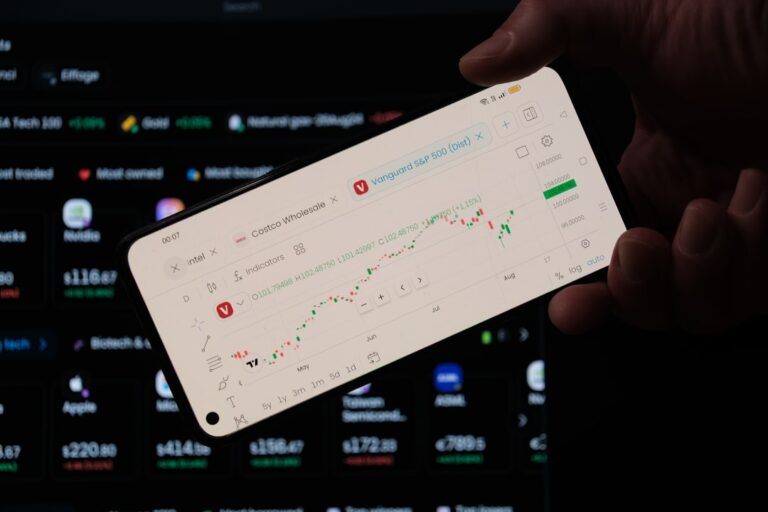
This is where the investor angle becomes critical. If a robot is going to take your job (or someone’s job), the logical hedge is to own a piece of that robot’s maker. As a retail investor in Korean and US markets, I’ve been building positions in AI infrastructure, semiconductor memory, and robotics plays — not as speculation, but as a structural hedge against the income risk this wave creates.
| Category | Example Exposure | Rationale |
|---|---|---|
| AI Infrastructure | NVIDIA, SK Hynix (HBM) | The picks-and-shovels of AI |
| Robotics | Tesla, Hyundai Robotics | Physical AI displacement layer |
| Enterprise AI Software | Microsoft, Palantir | White collar workflow replacement |
Move 3 — Stay Ahead of the Information Curve
The people who got hurt worst in past technological shifts weren’t the last to adapt. They were the last to understand what was happening. AI job displacement affecting white collar workers is being discussed in boardrooms and policy circles right now. The average employee hears about it two years later through layoff announcements.
Reading primary sources — IMF World Economic Outlook, WEF reports, company earnings calls — is not optional anymore. It’s how you see the curve coming before it hits you.
| Use AI as a tool | → | Own AI equity | → | Stay informed early |
The Bottom Line for Global Investors
Musk might not be wrong. The abundant future he describes could actually arrive — for our children, or their children. But the road between here and there runs directly through a period of serious AI job displacement of white collar workers, rising inequality, and disrupted income streams for people who thought they were secure.
The investors who come out ahead won’t be the ones who waited for consensus. They’ll be the ones who understood the sequence — displacement first, abundance later — and positioned themselves accordingly. That means using AI at work, owning AI as capital, and maintaining an information edge.
This transition is uncomfortable to think about. But discomfort is usually where the opportunity is hiding.