KOSPI Market Analysis: When the Index Drops 8% — Should You Sell or Buy More?
When KOSPI Falls 8% in a Day — A Korean Investor’s Reality Check
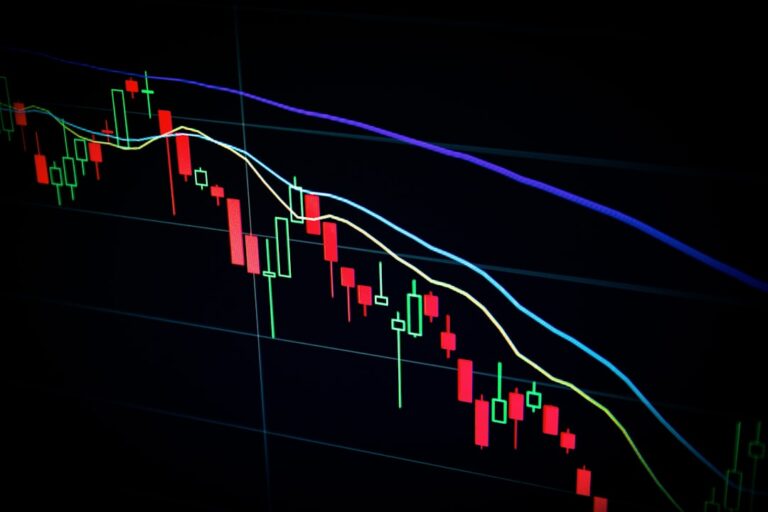
If you’ve been watching Korean equities recently, you already know the feeling. The screen turns red, circuit breakers flash, and financial news channels cycle through the same breathless commentary. From where I sit in Korea, watching the KOSPI market analysis community go into full panic mode is something I’ve seen before — and that history matters enormously for what you do next.
An 8% single-day drop on the KOSPI is not just a bad day. It belongs to a very short list of historically extreme events. The question every investor — Korean or global — faces in that moment is brutally simple: do you sell, or do you buy? This post is my honest attempt to answer that, with data and a grounded perspective from inside Korea.
How Rare Is an 8% KOSPI Drop? Putting It in Historical Context
Let’s establish the baseline first. Single-day drops of 8% or more on the KOSPI are genuinely rare. When you zoom out on the data, these episodes cluster around a handful of crisis moments — the 1997 Asian Financial Crisis, the 2008 Global Financial Crisis, the COVID-19 shock of March 2020, and a small number of other macro dislocations.
📊 Key Numbers: KOSPI Historic Single-Day Crash Episodes
• 1997 Asian Financial Crisis: Multiple sessions with losses exceeding 8–10%
• 2008 Global Financial Crisis: KOSPI fell roughly 11% in a single session (October 2008)
• March 2020 COVID Crash: KOSPI dropped ~8.4% on March 19, 2020
• Average 12-month recovery after each crash bottom: +40% to +80%
• Frequency of 8%+ single-day drops since 1990: Fewer than 15 confirmed sessions
That context is important. When you are inside one of these sessions, the emotional pressure to sell is enormous. Korean retail investors — who account for a significant share of KOSPI trading volume — tend to amplify volatility in both directions. Foreign institutional selling accelerates the move, and domestic panic follows. It is a pattern I have watched play out repeatedly as a Korean investor.
What Actually Drives These Extreme Moves on KOSPI?
The Structural Vulnerability of Korean Markets
Korea’s equity market has a specific set of vulnerabilities that global investors need to understand. The KOSPI is heavily weighted toward export-oriented industrials — semiconductors, petrochemicals (my own industry), shipbuilding, and autos. This means the index is acutely sensitive to global trade conditions, the US dollar, and Chinese demand cycles simultaneously.
When global risk-off sentiment hits, Korea gets hit harder than most. Foreign investors hold a large portion of KOSPI float, and when they rotate out of emerging markets, Korea is often one of the first and largest exits. This mechanical dynamic is part of why single-day moves can be so violent here.
| Factor | Impact on KOSPI Volatility | Global Comparison |
|---|---|---|
| Foreign Investor Ownership | ~30% of market cap — fast exits amplify drops | Higher than most EM peers |
| Export Concentration (Semis, Petrochem) | Ties KOSPI tightly to global trade cycle | S&P 500 more domestically driven |
| Retail Investor Participation | High — momentum chasing amplifies moves | Higher retail share than most developed markets |
| KRW/USD Sensitivity | Weak won = additional foreign selling pressure | Currency risk stacks on top of equity risk |
The Real Question: Sell, Hold, or Buy?
What the Historical Data Tells Us
Here is where my KOSPI market analysis gets uncomfortable for the panic-sellers. Across every major crash episode in Korean market history, investors who sold at the point of maximum fear — the 8%+ single-day drop sessions — almost universally did so at or near the cycle bottom. The recoveries that followed were not gradual. They were sharp and fast.
This is not a unique insight to Korea. JP Morgan’s long-run market data consistently shows that missing the ten best days in a market cycle — days that often cluster near the worst days — destroys long-term returns. The Korean market is no exception.
But Blind Buying Isn’t the Answer Either
As a Korean investor, I want to be honest: “buy the dip” is not a strategy — it’s a slogan. What matters is what you are buying and why. During extreme KOSPI crashes, the market does not fall uniformly. Some sectors and individual names become genuinely cheap relative to fundamentals. Others were already expensive before the crash and remain dangerous even after a 20–30% drawdown.
The approach I personally use during these panic sessions is systematic, not emotional. I look at three things: valuation versus historical averages, the specific macro trigger driving the crash (is it Korea-specific or global?), and the level of foreign net selling (which you can track daily through the Korea Exchange’s official data portal).
| Identify the Trigger Global vs. Korea-specific |
→ | Check Valuations P/B, P/E vs. 5-year avg |
→ | Monitor Foreign Flow Net selling stabilizing? |
→ | Staged Entry Scale in, don’t lump sum |
The Korean Psychological Trap — And How to Avoid It
From where I sit in Korea, watching the retail investor community during a crash is genuinely instructive. Korean retail investors — sometimes called 개미 (individual ants) — have a well-documented tendency to buy aggressively on the way down, then panic-sell near the bottom when losses become psychologically unbearable. The result is a cycle of buying high on optimism and selling low on fear that repeats across every major downturn.
Global investors watching Korean markets from the outside sometimes assume Korean retail money is “dumb money.” That is not quite right. Many Korean individual investors are sophisticated and well-informed. The problem is purely psychological — the same behavioral finance traps that exist everywhere, amplified by the structural volatility I described above. Understanding loss aversion and its effect on investor behavior is genuinely useful context here.
What This Means for Global Investors Watching KOSPI
For international investors, an 8% KOSPI crash day carries a specific set of signals worth monitoring. First, it often precedes a reversal in foreign institutional flows — the same funds that sold aggressively start re-entering within weeks. Second, the Korean won (KRW) tends to stabilize shortly after equity bottoms, which adds a currency tailwind for foreign investors buying Korean assets at depressed prices.
The deeper point of this KOSPI market analysis is this: extreme fear events in Korea are historically excellent long-term entry points for investors who can tolerate short-term volatility. They are not reliable signals to exit. The data across 25+ years of Korean market history is remarkably consistent on this point.
That does not mean you buy everything indiscriminately on a crash day. It means you do your homework in advance — know which Korean sectors and names you want to own, at what valuations, and with what position sizes — so that when the panic arrives, you are ready to act on a plan rather than react to fear.
Final Takeaway for Global Investors
As a Korean investor who has lived through several of these extreme KOSPI sessions personally, my honest conclusion is straightforward: the 8% crash day is almost never the right time to sell. It is, historically, one of the better times to begin building positions — carefully, systematically, and with clear logic about what you own and why.
The global investor who understands KOSPI’s structural dynamics — its export sensitivity, its foreign flow mechanics, its retail behavioral patterns — is in a far better position to act rationally when Korean markets go into one of these historic fear episodes. That is exactly the kind of edge I try to provide here at Jay’s Trend.
Stay analytical, keep your watchlist ready, and don’t let the red screens make your decisions for you. The best opportunities in Korean markets have always come disguised as disasters.