Daehankwang 010170 Optical Fiber Stock Outlook: 5 Things Global Investors Must Know Before Buying
A penny stock trading at 567 won just twelve months ago. Now pushing past 31,500 won intraday on the KOSDAQ. That’s not a typo — that’s the Daehankwang 010170 optical fiber stock outlook story unfolding right now in one of Korea’s most watched small-cap names. If you’re a global investor trying to make sense of Korea’s AI infrastructure and defense plays, this one deserves a serious look — and an equally serious reality check.
On May 6, 2026, Daehankwang (Taihan Fiberoptics) completed its acquisition of Incab America LLC, a Texas-based optical fiber cable manufacturer. That move effectively makes Daehankwang eligible to compete as a US domestic supplier under the BEAD (Broadband Equity, Access, and Deployment) program — a $42 billion federal broadband infrastructure rollout. Two days later, on May 8, the stock was flagged by Korea Exchange as a “caution investment” stock after its excess return exceeded 200% over the prior 12 months. That combination of news flow tells you everything about where this name sits right now: explosive momentum, genuine catalysts, and very real risks.
Let me break this down the way I see it as someone working inside Korea’s industrial sector.
What Is Daehankwang (010170) and Why Does It Matter Now?
Company Background
Founded in 1974, Daehankwang — officially Taihan Fiberoptics — is Korea’s only vertically integrated optical fiber manufacturer. The name itself tells the story: “Daehan” references the Republic of Korea, while “gwang” (光) means light — the medium through which it transmits data. Listed on KOSDAQ since 1994, the company has quietly built a full production chain covering preform manufacturing, fiber drawing, and finished optical cable assembly.
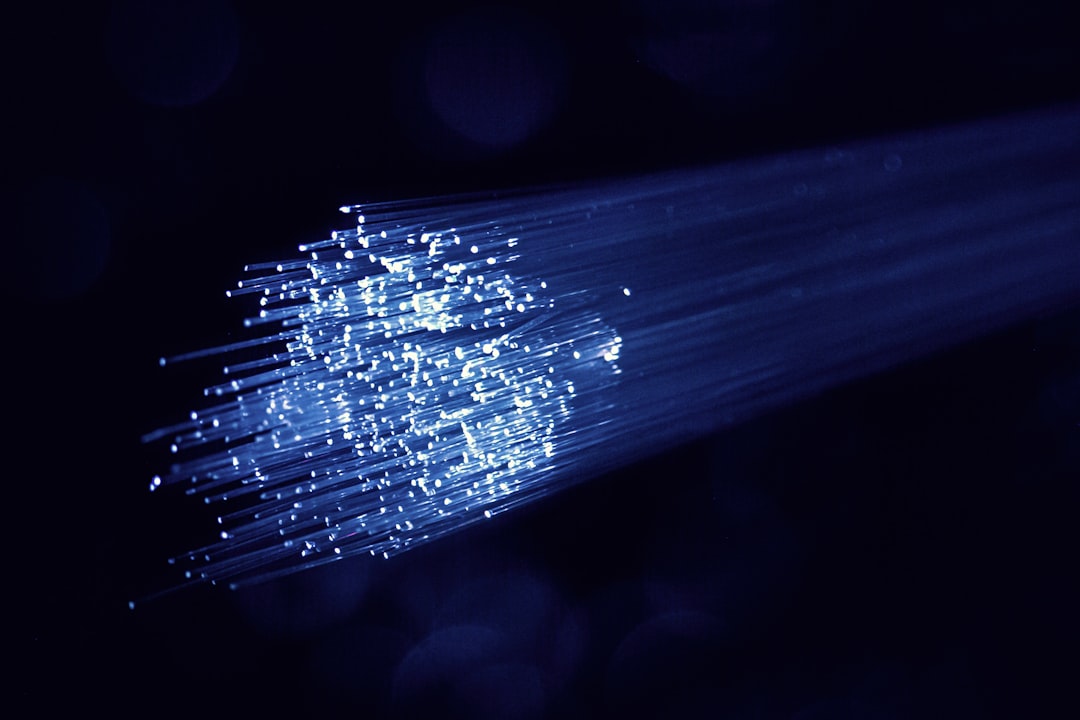
What makes this unusual is the preform. Most cable manufacturers buy optical fiber from outside suppliers and simply assemble the cable. Daehankwang makes the preform — the thick glass rod that gets drawn at extreme heat into hair-thin optical fiber strands. This is the same model used by Corning, the global leader. In Korea, no other company does this end-to-end. That vertical integration is the core competitive moat.
Three growth themes are converging on this company right now: AI data center optical cable demand, the US BEAD infrastructure program, and laser-based defense systems. Any one of these would be enough to attract attention. All three together explain why the stock has gone parabolic.
📊 Key Numbers — Daehankwang 010170 (as of May 14, 2026)
• Current Share Price: 24,750 KRW (closing price, May 14, 2026)
• 52-Week High / Low: 31,500 KRW / 567 KRW
• Market Cap (estimated): ~3.84 trillion KRW
• 2025 Revenue: 139.4 billion KRW (IFRS consolidated)
• 2025 Operating Loss: -22.9 billion KRW
• Debt-to-Equity Ratio: ~229% (end-2025)
• Broker Target Price: 2,150 KRW (SK Securities, Oct 2025)
• Foreign Investor Net Buying: +2,438,318 shares (Jan–May 2026 cumulative)
The 3 Business Pillars Driving the Daehankwang 010170 Optical Fiber Stock Outlook
1. Optical Communications — The Vertical Integration Advantage
As a Korean engineer who tracks global supply chains daily, I can tell you that preform self-sufficiency is not a small thing. The global optical fiber market has periodic supply crunches — we saw it during the pandemic and we’re seeing signs of it again as AI hyperscalers accelerate buildout. When fiber demand spikes, companies that depend on outside preform suppliers get squeezed on margins. Daehankwang doesn’t face that problem to the same degree. In February 2026, the company landed a contract to supply 864-fiber ultra-high-density cables to a North American hyperscaler — contract value approximately $3.78 million. That’s a small number in absolute terms, but it’s the foothold that matters.
2. US Infrastructure — The BEAD Play via Incab America
The Incab America acquisition is the move that really got the market excited. The BEAD program requires “Buy America” compliance — meaning federal funds must go to US-manufactured materials. By owning a Texas production facility, Daehankwang can bid on BEAD contracts as a domestic US supplier. Incab America posted roughly 35 billion KRW in revenue in 2025; estimates for 2026 point toward 50 billion KRW as the company pivots away from its former Russian supply relationships and captures new North American orders.
3. Defense — The Laser Weapon Wild Card
This is the most speculative piece, but it’s also arguably the most exciting for long-term investors. Daehankwang is reportedly the only Korean company to have domestically developed fiber laser modules — the core component of next-generation directed-energy weapons. The Korean military’s laser weapon system, known as “Cheon-gwang” (천광), is currently in development, and Daehankwang is positioned as the likely exclusive domestic supplier of its laser module. With drone threats reshaping modern battlefields, laser-based counter-drone systems are moving from science fiction to procurement reality. The defense revenue contribution is minimal today, but the potential re-rating if a supply contract is formalized is significant.
Competitive Landscape
| Competitor | Threat Area | Threat Level |
|---|---|---|
| Corning (US) | Global #1 in optical fiber, dominant brand | High |
| FiberHome (China) | Low-cost volume competition | High |
| LS Cable (Korea) | Domestic power and telecom cables | Medium |
| Fujikura (Japan) | Specialty optical fiber technology | Medium |
The current environment does favor Daehankwang more than the competitive map suggests at first glance. AI data center buildout has created a genuine supply shortage in high-density optical cable. Even Corning has announced capacity expansions — but new capacity takes time to come online. That gap is exactly where Daehankwang is winning orders right now. On the ground here in Korea, the sense in industrial circles is that this supply tightness will persist through at least late 2026.
Financial Reality Check — The Daehankwang 010170 Optical Fiber Stock Outlook Has a Profitability Problem
| Financial Metric | 2024 | 2025 |
|---|---|---|
| Revenue | 152.7 billion KRW | 139.4 billion KRW (-8.7%) |
| Operating Income | -29.7 billion KRW | -22.9 billion KRW (-22.8% loss reduction) |
| Net Income | N/A | -24.5 billion KRW |
| Total Assets | N/A | 211.8 billion KRW |
| Debt-to-Equity Ratio | 413.5% | 228.6% |
The headline message is straightforward: losses are narrowing, but this company is not yet profitable. The quarterly trend is more encouraging — operating losses moved from -6.9 billion KRW in Q1 2025 to roughly -1.2 billion KRW by Q3 2025 (estimated). That trajectory points toward a possible 2026 breakeven. The question is whether the stock’s current market cap of approximately 3.84 trillion KRW is pricing in a business that hasn’t yet demonstrated it can generate positive earnings.
The PBR situation is stark. At the May 14 closing price, the stock trades at over 62x book value. Traditional valuation frameworks simply don’t apply here. This is a pure growth-and-momentum story, and it needs to be evaluated as such. The broker target price of 2,150 KRW from SK Securities — set in October 2025 — is essentially irrelevant at current price levels, but it does remind you how far the market has run ahead of fundamental coverage.
Ownership Flow — Who Is Actually Buying?
| Foreigners Net Buy +2.44M shares |
→ | Institutions Net Buy +194K shares |
→ | Retail Net Sell -3.01M shares |
The flow picture is interesting. Foreign investors have accumulated over 2.4 million net shares through the January–May 2026 period. Institutions are also net buyers, though at a much smaller scale. Retail investors are the net sellers — largely taking profits or cutting exposure near the highs. The re-acceleration of foreign buying in May is one of the more constructive technical signals in the current data. Watching this from the Korean market side, smart foreign money rarely chases penny stocks — when they accumulate a name like this, they usually have a thesis beyond the chart.
3 Scenarios for the Daehankwang 010170 Optical Fiber Stock Outlook
Bull Case
Q2 2026 delivers an operating profit — even a small one. A formal Cheon-gwang laser module supply contract gets announced. BEAD order backlog through Incab America becomes visible and quantifiable. If all three happen close together, the stock gets re-rated from “optical fiber manufacturer” to “AI infrastructure + defense dual-growth play.” Analyst coverage gets updated, target prices jump, and the stock potentially revisits or surpasses the 31,500 KRW high.
Base Case
Gradual profitability recovery through H2 2026. US revenue grows steadily via Incab America. Defense revenues remain small and speculative. The stock consolidates in a broad range around current levels — neither a major re-rating event nor a collapse, just a long digestion period after the initial surge.
Bear Case
Chinese fiber oversupply returns, putting downward pressure on cable pricing globally. BEAD program faces budget delays or political headwinds. The company needs to raise additional capital through another equity offering, diluting existing shareholders. This is not a remote possibility — the company has used rights offerings before, and accumulated deficit remains substantial. A dilution event at these prices would be painful.
Jay’s Verdict — 5 Questions to Ask Before Touching This Stock
As a Korean engineer tracking both KOSPI and NASDAQ, I look at names like this with a specific filter: is the operational story real, and is the price already pricing in perfection? Here, the operational story is genuinely real. The BEAD angle is real. The AI cable demand is real. The defense optionality is real. What’s also real is that this company hasn’t posted a profitable year in recent history, the PBR is above 62x, and the stock is down over 21% from its 52-week high even after the massive run.
My personal read on the Daehankwang 010170 optical fiber stock outlook: this is a high-conviction long-term story inside a dangerously overextended short-term chart. The Q1 2026 earnings release (scheduled around May 18) is the first real checkpoint. If the loss has narrowed further — or if there’s any sign of a quarterly profit — that could serve as the next catalyst for another leg higher. Without that, the stock needs time to consolidate and let fundamentals catch up to the narrative.
Five questions every investor should answer before entering:
- Do you fully understand that this company is still operating at a loss?
- Are you sizing this position at 10% or less of your portfolio?
- Have you noted the May 18 earnings date as a binary event?
- Can you hold through a 30–40% correction without panic selling?
- Are you waiting for at least one concrete catalyst confirmation — BEAD order, defense contract, or profitability — before adding more?
If you can answer yes to most of those, then the Daehankwang 010170 optical fiber stock outlook deserves a spot on your watchlist — with a small, disciplined position rather than a concentrated bet.
A penny stock growing wings with AI and defense momentum is a compelling Korean market story. Whether those wings are structural or speculative is what the next two quarters will reveal.
※ This post represents my personal views as an individual investor and engineer. It is not financial advice. All investment decisions are your own responsibility. ※