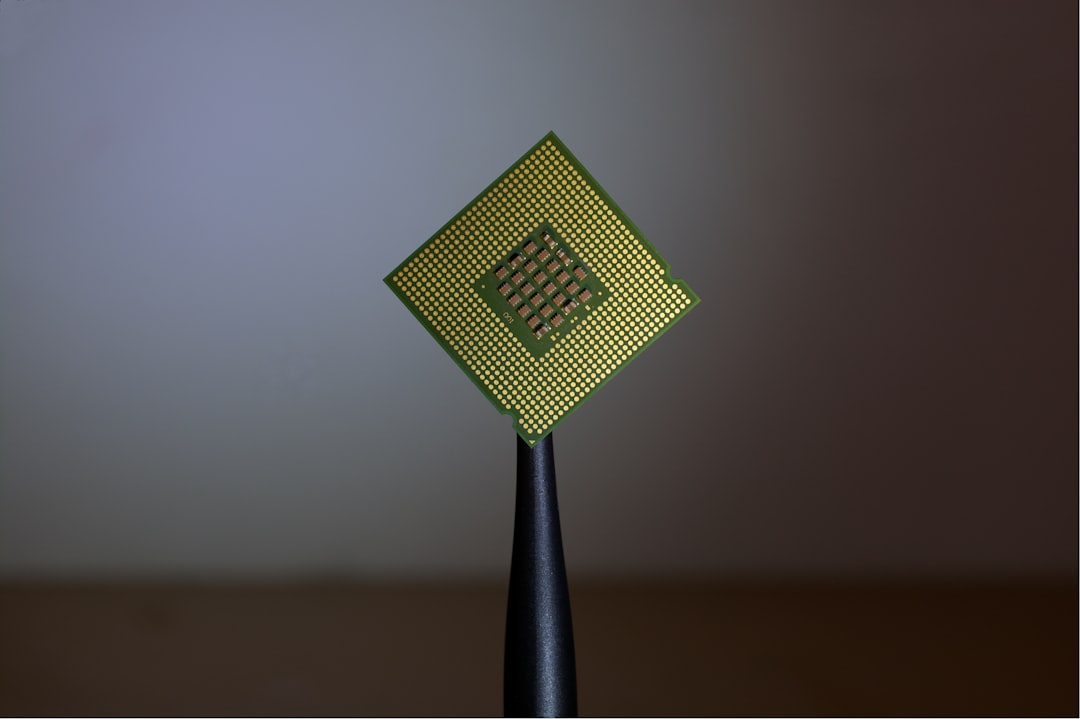
Quantum Computing Stocks AI Next Wave: 4 Korean Investor Insights Before the Sector Explodes
Quantum computing stocks are the AI next wave Korea investors have been waiting for — but the gap between winners and losers is already wider than most people realize. In December 2024, Google’s Willow chip proved something researchers had chased for 30 years: error correction that actually gets better as you add more qubits. Then in May 2026, the US government issued a $2.01 billion letter of intent to support nine quantum companies. And on June 4, Quantinuum debuted on Nasdaq with a $14 billion market cap on day one — oversubscribed by more than 20x.
Yet QUBT, sitting in the exact same sector, is down 34% over the past year as of June 19.
Same sector. Completely different outcomes. That divergence is exactly why this moment demands a serious look — not just hype-chasing, but real analysis of what’s driving the split.
Why Capital Markets Are Suddenly Betting on Quantum Computing Stocks as the AI Next Wave
I’ll be honest — even with an engineering background, quantum physics makes my head spin. I’m still digesting everything AI threw at us over the past two years. But something about the quantum computing signals felt different this time, and as someone working inside Korea’s industrial sector, I’ve learned to pay attention when the data diverges from the narrative.
The difference this time? Revenue. Government budgets. IPOs. M&A. These are not theoretical milestones — they’re capital allocation events.
3 Inflection Points That Changed Everything
| Inflection Point | What Happened | Why It Matters |
|---|---|---|
| Technical Breakthrough | Google Willow chip proved below-threshold error correction (Dec 2024) | First time scaling actually reduces errors — the core physics problem is cracked |
| Government Capital | NIST issued $2.013B letter of intent to 9 companies (May 21) | Federal money flowing = long-term runway secured for top players |
| Revenue Phase Entry | IonQ posted 755% YoY revenue growth last quarter | Research-stage companies are crossing into commercial reality |
Within three months of Willow’s announcement, both Microsoft and Amazon had released their own quantum chips. That’s not coincidence — that’s a technology arms race reaching its first visible commercial phase. NIST’s quantum initiative is now the clearest signal that the US government is treating this as strategic infrastructure, not a research curiosity.
The Quantum Four: Same Sector, 135 Percentage Points Apart
Watching this from the Korean market side, the performance dispersion within a single sector is one of the most important signals an investor can see. When the spread is this wide, it means the market is actively doing due diligence — rewarding substance and punishing noise. The so-called “Quantum Four” — the four pure-play quantum computing stocks listed in the US — tell this story clearly.
1-Year Performance: Quantum Four (as of June 19)
| Ticker | Company | 1-Year Return | Key Differentiator |
|---|---|---|---|
| RGTI | Rigetti Computing | +101% | Superconducting qubit focus, US government contracts |
| QBTS | D-Wave Quantum | +72% | Annealing-based, commercial enterprise clients |
| IONQ | IonQ | +63% | Trapped-ion architecture, 755% YoY revenue growth |
| QUBT | Quantum Computing Inc. | -34% | 9,364% YoY revenue growth but much smaller base; execution questions remain |
Here’s what I find fascinating about QUBT specifically. Yes, it’s the worst performer of the four over the past year. But it posted 9,364% year-on-year revenue growth in Q1 and holds approximately $1.4 billion in cash. So the underperformance isn’t purely about fundamentals — it’s about credibility, execution risk, and what the market believes the company can actually deliver at scale.
That’s the real lesson here. Quantum computing stocks as the AI next wave are not a monolithic trade. Between June 15 and 16, the entire sector swung from +12% to -7% in a matter of days. The short-term volatility is shared. The long-term divergence is not.
📊 Key Numbers
• Quantinuum IPO market cap Day 1: $14 billion
• Quantinuum IPO oversubscription: 20x+
• US NIST quantum investment commitment: $2.013 billion
• IonQ revenue growth (latest quarter YoY): +755%
• QUBT revenue growth (Q1 YoY): +9,364%
• Performance gap between top and bottom Quantum Four: 135 percentage points
How the Quantum Computing AI Next Wave Unfolds: The Investment Progression
As a Korean engineer tracking both KOSPI and NASDAQ, I think about quantum computing the same way I thought about early-stage battery material plays — the technology layer gets proven first, then the capital layer follows, then revenue stratification sorts the real companies from the theme plays. We’re somewhere between layer two and layer three right now.
| Tech Proof Google Willow (2024) |
→ | Capital Flows NIST $2B + IPOs |
→ | Revenue Phase IonQ, D-Wave |
→ | Stock Divergence 135pp gap forming |
This matters for Korean investors specifically because KOSPI-listed companies with quantum exposure — materials suppliers, cryogenic equipment makers, semiconductor packaging firms — are starting to get tagged as quantum plays whether they deserve it or not. Knowing the underlying technology progression helps you separate genuine exposure from theme-riding. That’s exactly what we’ll cover in later parts of this series.
What This Series Will Cover: 7-Part Roadmap
I’m running this as a seven-part series because the question that actually matters — which quantum computing stocks are real and which are just riding the AI next wave theme? — cannot be answered in a single post. Here’s the full roadmap:
| Part | Topic |
|---|---|
| Part 1 (this post) | Why quantum computing is the AI next wave right now |
| Part 2 | Qubit fundamentals — how they’re actually built |
| Part 3 | 5 implementation approaches compared (superconducting vs. trapped-ion vs. photonic, etc.) |
| Part 4 | Big Tech’s quantum arms race — Google, Microsoft, Amazon, IBM |
| Part 5 | Deep dive: US-listed pure-play quantum stocks |
| Part 6 | Korean quantum-related stocks — who has real exposure? |
| Part 7 | Investor checklist — how to evaluate any quantum stock yourself |
Part 2 gets technical — we’ll look at Josephson junctions and what cryogenic cooling actually involves. If you’ve wondered why quantum computers need to operate at temperatures colder than outer space, that’s where we’ll unpack it. The engineering context matters for understanding which companies have defensible moats and which are assembling off-the-shelf components with a “quantum” press release attached.
The Takeaway for Global Investors Right Now
On the ground here in Korea, I watch themes inflate and collapse regularly. Superconductors. Cold fusion. Humanoid robots that were “three years away” for a decade. Quantum computing stocks could follow that path. But the current signals are structurally different — revenue is real, government money is committed, and the underlying physics has cleared a barrier that scientists spent thirty years trying to cross.
That doesn’t mean every quantum ticker is a buy. The 135-point performance gap within the Quantum Four is the market telling you that stock picking — not sector allocation — is the game here.
My practical suggestion: pick one of the four tickers that interests you most, add it to your watchlist, and follow along with this series. By Part 7, you’ll have your own analytical framework to compare them properly — without needing to take anyone’s word for it, including mine.
The Quantum Computing Report is a solid independent resource if you want to track developments between posts. It’s one of the few places that covers the sector without turning everything into a Reddit-style price call.