Warren Buffett Patience Strategy: 3 Rules for Surviving a Volatile Market From Inside Korea
When geopolitical shockwaves hit, most investors panic. Right now, the Warren Buffett patience strategy is the framework every global investor needs — and watching it play out from inside Korea makes the lessons hit even harder. KOSPI circuit breakers, sidecars triggering, panic selling cascading across screens. If you’ve been glued to the markets recently, you know exactly what I mean.
Let me walk you through how I’m thinking about this — not as a commentator sitting safely on the sidelines, but as someone personally invested in both Korean and US markets, watching these moves in real time.
The Trigger: Geopolitical Fear and the Panic Sell Trap
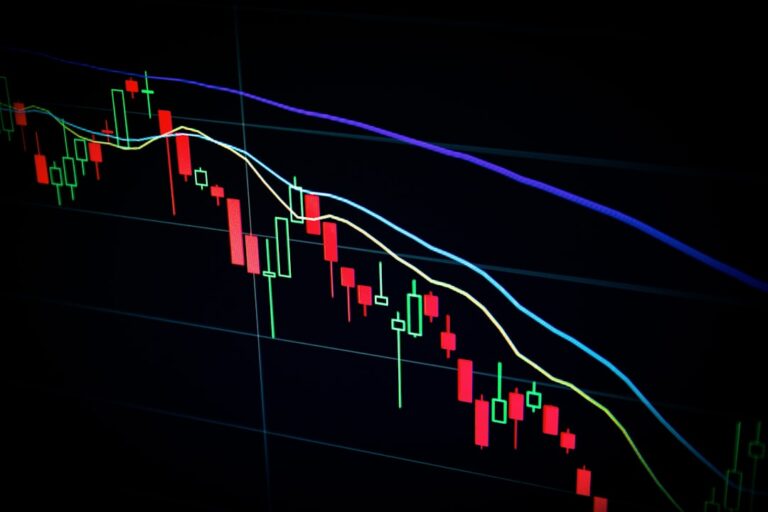
War headlines hit markets fast. Prices drop before most retail investors even finish reading the news alert. On the ground here in Korea, the mood gets heavy quickly — and KOSPI tends to overreact to geopolitical stress given its export-dependent structure and foreign investor sensitivity.
The pattern is painfully predictable. Markets fall. News turns negative. Social media fills with worst-case scenarios. And the first instinct for the average investor is brutally simple:
“I need to sell before I lose more.”
This is what I call first-level thinking — reactive, fear-driven, and extremely common. It’s not stupid. It’s human. But it’s almost always the wrong move.
📊 First-Level Thinking in a Panic Market
• Trigger: Geopolitical conflict → sharp equity sell-off
• Reaction: “Protect capital, sell now”
• Assumption: War = prolonged market decline
• Plan: Move to cash, re-enter when things “calm down”
• Problem: Misses the recovery. Locks in the loss.
Warren Buffett Patience Strategy: Second-Level Thinking
This is where the Warren Buffett patience strategy becomes essential. Buffett’s core message isn’t “just hold and hope.” It’s deeper than that — and frankly, harder to execute than any technical indicator I’ve ever used in nine years of engineering-informed market analysis.
His principle: wait until it’s profitable. Focus on business fundamentals, not price noise. When the market is drowning in fear, ask the simple question — has the actual earning power of this business changed?
That question cuts through an enormous amount of noise.
Rule 1 — Simplicity Over Complexity
Buffett once said, “Simplicity is harder than complexity.” I think about this a lot. As a petrochemical engineer, I’m trained to model complex systems — feedstock prices, cracking margins, refinery throughput. But in investing, I’ve learned that more complexity often means more ways to be wrong.
In a volatile, fear-driven market, the discipline of the Warren Buffett patience strategy is to strip everything back to fundamentals. Is the company still generating cash? Is its competitive moat intact? Did a geopolitical event change the business, or just the price?
For most quality companies — the answer is: the business is fine. The price is just scared.
Rule 2 — Don’t Confuse Price with Value
This is the mistake I see constantly, both in Korean retail investor communities and in global financial media. A falling stock price is treated as evidence that something is fundamentally wrong. Sometimes that’s true. But in a broad panic sell-off triggered by geopolitical fear? Usually not.
Watching this from the Korean market side, I see this confusion constantly. KOSPI heavyweights — Samsung Electronics, POSCO, SK Hynix — can get dragged down by macro fear even when their underlying order books and balance sheets remain solid. The Warren Buffett patience strategy says: that’s not a warning sign. That’s a buying opportunity, if you’ve done the work.
Rule 3 — Avoid the Mistake, Not Just the Loss
Here’s what separates Buffett from almost everyone else. When markets are most chaotic, his priority isn’t maximizing gains — it’s not making an irreversible mistake. Selling a fundamentally strong company during a panic is exactly that kind of mistake. You can’t easily undo it, because by the time sentiment recovers, prices have already moved.
As someone inside Korea’s industrial sector who tracks global supply chains professionally, I know firsthand how quickly market narratives overshoot the actual operational reality. A geopolitical scare that sends KOSPI down 5% in a week rarely causes a 5% permanent damage to Korea’s export infrastructure. The fear is real. The fundamental impact is usually temporary.
How the Warren Buffett Patience Strategy Connects to Preparation
Here’s the part that doesn’t get enough attention. The Warren Buffett patience strategy only works if you’ve done the analytical work before the panic hits. Patience without conviction is just passive hope. Buffett isn’t sitting still because he’s frozen — he’s sitting still because he already knows what he owns and why.
| Scenario | First-Level Response | Buffett Patience Response |
|---|---|---|
| Geopolitical conflict → market drop | Panic sell, move to cash | Check fundamentals, hold or buy |
| Negative news cycle intensifies | Cut positions to reduce “exposure” | Assess if business model is actually impaired |
| Circuit breaker / sidecar triggers | Treat as signal to exit | Potential entry signal for prepared investors |
| Portfolio turns red | Regret, reactive repositioning | Trust prior analysis, wait for value recognition |
This is why work like Buffett’s annual shareholder letters is worth reading every year — not for stock tips, but for the mental framework. And it’s why building your own stock-screening process — identifying undervalued names with strong moats before the panic — is what separates investors who profit from volatility from those who get hurt by it.
| Pre-Panic: Identify Quality Companies |
→ | During Panic: Check Fundamentals |
→ | Post-Panic: Hold or Add |
→ | Result: Market Rewards Patience |
Research from DALBAR’s Quantitative Analysis of Investor Behavior consistently shows that average investors dramatically underperform market indices — primarily because of panic-driven timing mistakes. The gap isn’t strategy. It’s emotional discipline.
The Korean Market Angle: Why Patience Is Especially Powerful Here
As a Korean engineer tracking both KOSPI and NASDAQ, I’d argue the Warren Buffett patience strategy for volatile markets is even more valuable in the Korean context. KOSPI is structurally more sensitive to external shocks — geopolitical events, USD/KRW moves, foreign investor flows. This means it tends to overcorrect on the downside when fear spikes.
That overcorrection creates real pricing anomalies in quality names. Korea’s leading industrial and tech companies don’t lose their global competitiveness because of a geopolitical headline. But their stock prices sometimes act like they do. For the prepared investor, that gap between fear-driven price and business reality is exactly where returns are made.
It’s also worth noting that the Korea Exchange’s sidecar and circuit breaker mechanisms — which activate during extreme volatility — are actually designed to give investors a pause, a moment to breathe. Buffett would probably appreciate the irony: the market’s own panic-prevention tools are a built-in reminder to stop, think, and ask whether anything fundamental has actually changed.
Actionable Takeaway for Global Investors
The Warren Buffett patience strategy isn’t passive. It’s an active commitment to doing the analytical work early, maintaining conviction through noise, and recognizing that volatility — especially geopolitical volatility — is usually temporary while business fundamentals are not.
Three things I’m doing right now, personally:
1. Reviewing fundamentals, not prices. For every position I hold, I’m asking: has the earning power of this business structurally changed? If the answer is no, the position stays.
2. Watching for over-sold quality names. Panic in Korean markets sometimes creates asymmetric entry points in export-oriented industrials and semiconductors. I’m keeping a watchlist ready.
3. Ignoring the news cycle’s timeline. Markets recover faster than headlines suggest. The investors who wait for “calm” before re-entering almost always miss the best part of the recovery.
The current volatility is noise. Painful, uncomfortable noise — but noise. If your companies are still fundamentally sound, then patience isn’t just a virtue right now. It’s the strategy.