Korea Flour Price Fixing Cartel: 3 Big Stocks Every Global Investor Must Watch Now
The Korea flour price fixing antitrust cartel scandal is one of the biggest corporate governance stories to hit the Korean market in years — and if you invest in Korean consumer stocks, food manufacturers, or even track KOSPI broadly, this matters to you. In early 2026, South Korea’s Fair Trade Commission (FTC) announced what could be the largest antitrust fine in the country’s history, targeting seven flour milling companies for six years of coordinated price manipulation. The numbers are staggering. The implications for investors are real.
Let me break down exactly what happened, what it means for the Big 3 stocks at the center of this mess, and whether there’s an opportunity buried inside the chaos.
What Is the Korea Flour Price Fixing Antitrust Cartel — And How Long Did It Run?
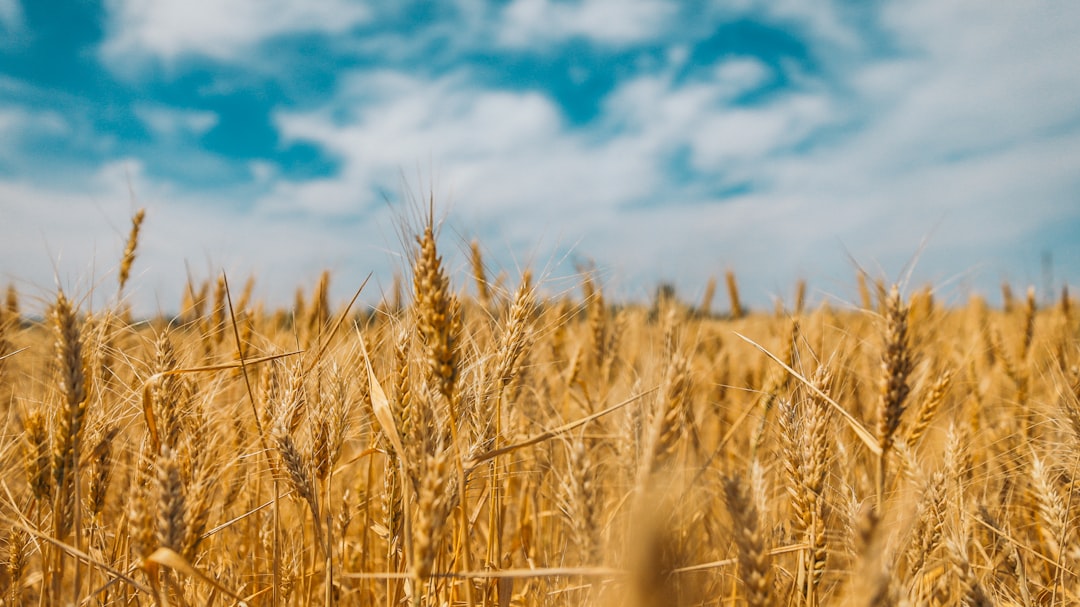
Between 2019 and 2025, seven of South Korea’s major flour milling companies allegedly met regularly to coordinate production volumes, fix market share allocations, and — critically — agree not to pass on falling global wheat prices to domestic buyers. That last point is key. Global wheat futures were declining from their post-Ukraine-invasion highs by 2023. Korean flour prices? Barely moved.
The total revenue implicated in this Korea flour price fixing antitrust cartel scheme is estimated at approximately ₩6 trillion (~$4.4 billion USD). The Korea FTC has signaled a record fine of roughly ₩1.16 trillion (~$850 million USD) — the largest antitrust penalty the commission has ever proposed. On top of that, regulators are considering something Korea hasn’t seen in 20 years: a mandatory price reduction order forcing companies to actually roll back flour prices.
Global Wheat Prices vs. Korean Flour Prices: The Smoking Gun
As someone inside Korea’s industrial sector who tracks commodity inputs professionally, the divergence between global wheat benchmarks and domestic Korean flour pricing was always noticeable. But seeing the documented evidence come out makes it even more striking.
After the Russia-Ukraine war drove Chicago wheat futures to historic highs in 2022, prices gradually normalized through 2023 and 2024. Korean importers were buying cheaper wheat. Korean flour millers were not passing those savings to food manufacturers or consumers. Bread prices in Seoul climbed into the top 1–2 globally among major cities. Ramen, crackers, bakery items — all stayed elevated. This was the direct economic cost of the Korea flour price fixing antitrust cartel landing on ordinary Korean households.
📊 Key Numbers at a Glance
• Cartel duration: 2019–2025 (approx. 6 years)
• Companies involved: 7 major Korean flour millers
• Total implicated revenue: ~₩6 trillion (~$4.4B USD)
• Proposed FTC fine: ~₩1.16 trillion (~$850M USD)
• Last price reduction order issued: 20+ years ago
• Global wheat price trend (2023–2025): Down significantly
• Korean flour prices during same period: Largely flat or rising
Korea Flour Price Fixing Antitrust Cartel: How It Hit the Big 3 Stocks
The three companies most directly in the spotlight are CJ CheilJedang, Daihan Flour Mills (대한제분), and Samyang Corporation. Watching this from the Korean market side, the share price moves over the past year have been painful for holders — and telling for observers.
| Company | 12-Month Price Movement | Key Risk Factor | Offsetting Factor |
|---|---|---|---|
| CJ CheilJedang | ~18% decline from peak | Largest absolute fine exposure | Strong bio & overseas food revenue buffers core earnings |
| Daihan Flour Mills | 25%+ sharp decline | Highest flour revenue concentration; “Gompyo” brand image hit | Least diversified — most exposed if price rollback order lands |
| Samyang Corporation | Elevated volatility; meaningful decline | Implicated in both flour AND sugar cartel simultaneously | Chemical division providing some earnings defense |
The near-term investment case is clearly challenged. The combination of an earnings shock from the fines themselves, plus the forward margin compression from any mandated price reductions, creates a tough setup for all three. Daihan Flour Mills is arguably the highest-risk name given how concentrated its business is in the exact segment under fire.
That said, as a Korean engineer tracking both KOSPI and NASDAQ, I’ve seen these regulatory shock cycles before. Once the final fine amount is confirmed — removing uncertainty — beaten-down stocks in this situation sometimes stage meaningful recoveries. The play, if there is one, is post-confirmation, not pre-confirmation.
Korea vs. US: Why Korean Antitrust Enforcement Feels Like a Slap on the Wrist
Here’s what frustrates a lot of Korean investors and citizens equally. The Korea flour price fixing antitrust cartel ran for six years. Companies made hundreds of billions in excess profit. And yet the structural deterrence in Korean law remains weaker than what you’d face in the United States.
| Enforcement Feature | South Korea | United States |
|---|---|---|
| Punitive damages cap | Up to 3x actual damages (rarely applied) | Historically up to 100x+ (now guided toward 1–9x by Supreme Court) |
| Burden of proof for consumers | Individual must prove own exact damages — very difficult | Class action structure lowers individual burden significantly |
| Criminal prosecution risk | Exists but infrequently results in meaningful sentences | DOJ actively pursues executive prison sentences |
| Deterrence effectiveness | Cartel profits often exceed penalties — profitable crime | Designed so crime never “pays” economically |
The proposed price reduction order this time around is Korea’s most powerful available tool given these structural gaps. On the ground here in Korea, many observers see this as a deliberate signal — President Lee Jae-myung has called these cartel practices “a cancerous threat to the national economy,” and the government wants to show this enforcement cycle is different from past cycles where companies paid up and moved on.
Whether it sticks as a precedent — or fades like previous enforcement bursts — is the real long-term policy question for anyone investing in Korean consumer staples.
The Policy Flow: From Cartel Discovery to Market Impact
| FTC Investigation Launched | → | Record Fine Announced (₩1.16T) | → | Mandatory Price Rollback Order | → | Downstream Food Price Declines |
If this chain plays out fully, consumers could start seeing lower prices on ramen, bread, and packaged snacks in the second half of 2026. For food manufacturers downstream of the flour millers — companies like Nongshim or Orion — cheaper input costs could actually be a quiet positive. That’s a second-order trade worth watching.
What Global Investors Should Take Away
The Korea flour price fixing antitrust cartel case is more than a domestic food industry scandal. It’s a window into how Korean regulatory enforcement is evolving — and potentially a leading indicator for how other heavily concentrated Korean industries might face similar scrutiny.
Here’s my practical read for global investors:
- Avoid catching the falling knife on Big 3 flour stocks before final fine confirmation. Uncertainty discount is real.
- Watch for a post-confirmation bounce — once the fine is locked in, the uncertainty clears, and these are not zero-revenue businesses.
- Track downstream food manufacturers as potential beneficiaries if mandatory price rollbacks reduce their raw material costs.
- Follow Korean FTC enforcement signals broadly — if regulators are emboldened here, other concentrated consumer sectors in Korea could face similar scrutiny. Check the Korea FTC’s official enforcement announcements directly for early signals.
Fair pricing doesn’t come from corporate ethics alone. It comes from enforcement that makes the crime genuinely not worth committing. Korea is testing that proposition right now — and the result will matter well beyond the flour aisle.