Korea Economy Analysis: What the Fourth Industrial Revolution Really Means for Korean and Global Investors
Every few decades, the global economy experiences a shift so fundamental that it renders old investment frameworks obsolete. We are living through one of those moments right now. From where I sit in Korea — one of the world’s most technology-dense industrial economies — the Fourth Industrial Revolution isn’t an abstract concept. It’s visible in the factories, the government policy budgets, the stock screens, and the conversations happening inside Korea’s largest conglomerates. This Korea economy analysis breaks down what the Four Industrial Revolutions actually mean, where Korea fits in, and why global investors need to pay close attention.
The Four Industrial Revolutions: A Quick Framework
Before we can talk about where Korea is headed, it helps to understand the arc of industrial history. Most economists and policymakers now use a four-stage framework to describe how human productivity has evolved. Each revolution was triggered by a transformative enabling technology — and each one reshuffled which nations and companies held economic power.
| Revolution | Period | Core Technology | Key Economic Shift |
|---|---|---|---|
| 1st Industrial Revolution | 1760s–1840s | Steam engine, mechanization | Agrarian → Manufacturing |
| 2nd Industrial Revolution | 1870s–1914 | Electricity, mass production | Craft → Industrial scale |
| 3rd Industrial Revolution | 1960s–2000s | Computers, internet, automation | Industrial → Digital/Information |
| 4th Industrial Revolution | 2010s–present | AI, IoT, biotech, quantum computing | Digital → Intelligent/Autonomous |
The distinction that matters most for investors is this: the Third Revolution digitized information. The Fourth Revolution makes that information act autonomously. That is a qualitatively different kind of disruption — and it has enormous implications for Korea’s industrial structure.
Where Korea Stands in the Fourth Industrial Revolution
As a Korean investor doing my own Korea economy analysis, what strikes me is how uniquely positioned — and uniquely exposed — Korea is right now. Korea built its economic miracle on the back of the Second and Third Industrial Revolutions: heavy manufacturing, shipbuilding, semiconductors, and consumer electronics. Samsung, SK Hynix, Hyundai, POSCO — these giants were architected for an era of scale and precision manufacturing.
The Fourth Industrial Revolution doesn’t erase that foundation. But it does demand a new layer on top of it. The key characteristics of this revolution include:
1. Artificial Intelligence as Infrastructure
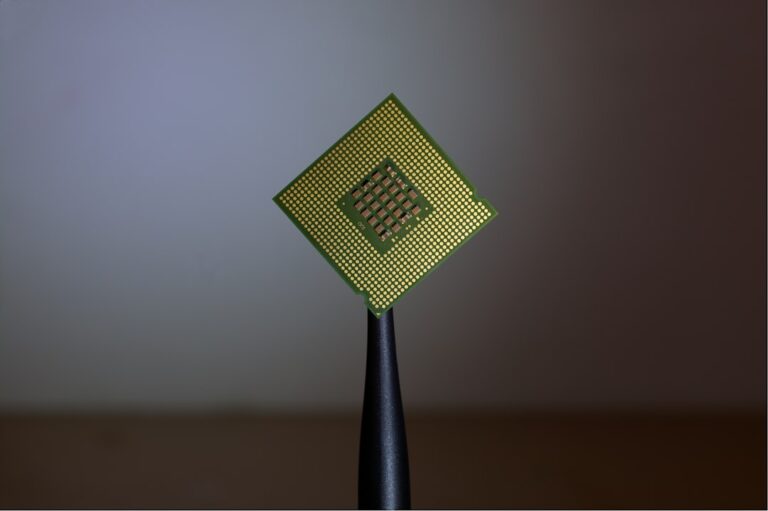
AI is no longer a feature — it’s becoming the operating system of the economy. In Korea, this is most visible in the semiconductor sector. SK Hynix’s HBM (High Bandwidth Memory) chips, which power NVIDIA’s AI accelerators, are a direct product of Korea’s ability to layer AI-era demand on top of its legacy semiconductor expertise. Korean chipmakers didn’t just survive the AI wave — they became critical to it.
2. Physical-Digital Convergence (Cyber-Physical Systems)
In Korean factories — including several petrochemical plants I’m professionally familiar with — digital twins and real-time sensor networks are no longer pilot projects. They are operational. Smart factory adoption in Korea’s manufacturing sector has accelerated sharply since 2020, driven partly by labor cost pressures and partly by government subsidies under Korea’s “Digital New Deal” policy framework.
3. Biotechnology and New Materials
Korea’s biotech sector, once considered a second-tier industry, has attracted serious global capital. The convergence of AI-driven drug discovery with Korea’s existing pharmaceutical manufacturing base is creating a new category of investment opportunity that many global investors are still underweighting.
Real-World Examples from Inside Korea
Abstract frameworks only get you so far. Here are concrete examples of the Fourth Industrial Revolution playing out in the Korean economy right now — the kind of on-the-ground observations that don’t always make it into international financial media.
Semiconductors: Korea’s AI Bet Is Already Paying Off
The global AI infrastructure buildout has made Korean semiconductor stocks some of the most strategically important equities in the world. SK Hynix now supplies a dominant share of HBM3 chips to the AI chip market. This is a direct Fourth Industrial Revolution dividend — Korea’s decades of memory chip manufacturing expertise translated into a critical input for the AI age.
Petrochemicals: The Disruption Is Real
In my own industry — petrochemicals — the Fourth Industrial Revolution is creating both threat and opportunity. AI-driven demand forecasting is compressing inventory inefficiencies. Autonomous process control is reducing energy consumption in cracking operations. But longer term, the rise of bio-based materials and AI-optimized material science poses a genuine structural challenge to conventional petrochemical demand. This is something I track closely, both professionally and as an investor.
Manufacturing: Smart Factories at Scale
Hyundai Motor’s investment in Boston Dynamics and its internal “Meta-Factory” initiative is perhaps the most visible Korean example of the Fourth Industrial Revolution in action. Robotic assembly, AI quality inspection, and digital twin simulation are being deployed across its Korean production lines. This isn’t a future story — it’s happening now.
What This Means for Korea Economy Analysis Going Forward
The Fourth Industrial Revolution is reshaping how serious investors should think about Korean equities and the broader Korean macro story. A few things stand out in my ongoing Korea economy analysis:
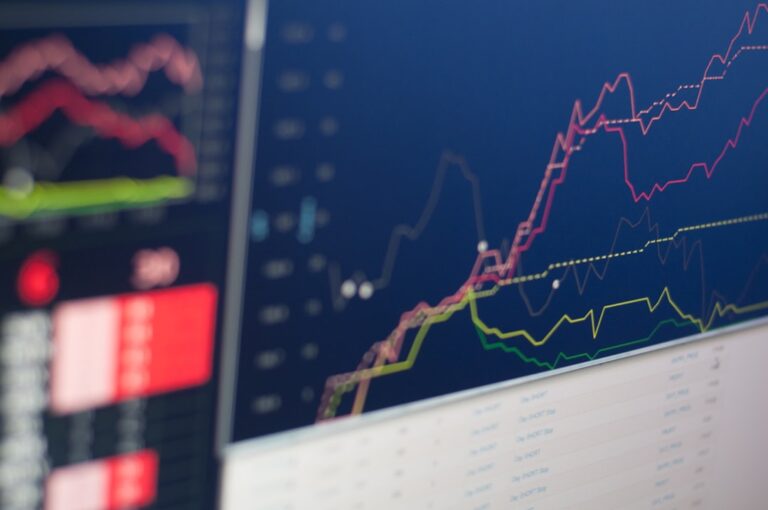
First, the KOSPI discount is increasingly hard to justify for leading Fourth Industrial Revolution players. Samsung Electronics and SK Hynix trade at significant discounts to their US and Taiwanese peers, despite supplying the critical memory infrastructure that makes the AI economy function. Some of this discount is structural (corporate governance concerns, geopolitical risk). But some of it represents a genuine mispricing that attentive global investors can exploit.
Second, Korea’s government policy is actively accelerating Fourth Industrial Revolution adoption. The current administration has maintained substantial R&D tax credits and infrastructure subsidies for AI, advanced manufacturing, and biotech. Understanding these policy tailwinds is something that’s much clearer when you’re reading Korean-language policy documents from inside the country rather than relying on translated summaries.
Third, not all Korean sectors will benefit equally. Traditional industries — conventional petrochemicals, basic steel, older consumer electronics supply chains — face genuine disruption pressure. As a Korean investor, I’m increasingly selective about which parts of the industrial economy I want exposure to.
📊 Key Numbers: Korea & the Fourth Industrial Revolution
• HBM Market Share: SK Hynix holds an estimated 50%+ share of HBM chips used in AI accelerators globally
• Smart Factory Investment: Korea’s government committed over ₩1 trillion to smart factory programs under the Digital New Deal
• R&D Intensity: Korea ranks among the top 3 globally in R&D spending as a percentage of GDP (~4.9%)
• KOSPI AI-Related Stocks: Semiconductor and tech-adjacent names now represent over 35% of KOSPI market cap
• Robotics Density: Korea has the highest robot density per manufacturing worker in the world — a direct Fourth Industrial Revolution indicator
Actionable Takeaway for Global Investors
If there’s one thing I want global investors to take away from this Korea economy analysis, it’s this: Korea is not a passive participant in the Fourth Industrial Revolution — it is one of its critical infrastructure providers.
The country that makes the memory chips, the batteries, the display panels, and increasingly the robots and AI hardware that power the intelligent economy deserves more serious attention than the persistent “Korea discount” narrative suggests. The risks are real — geopolitics, corporate governance, demographic headwinds. But so is the opportunity.
From where I sit in Korea, watching these trends unfold in real time across the industries I work in and invest in, the Fourth Industrial Revolution doesn’t feel like a distant macro theme. It feels like the operating environment I navigate every single day. And that, ultimately, is the value I try to bring to readers of Jay’s Trend — not just data, but genuine ground-level context that helps you invest with more clarity in one of Asia’s most important markets.
Follow Jay’s Trend at jaystrend.com for regular Korea economy analysis, KOSPI insights, and macro perspectives from inside Korea.